Saturday, July 22, 2023
FILM: Barbie


Saturday, July 01, 2023
FILM: Indiana Jones and the Dial of Destiny

Friday, June 30, 2023
ART: Zoe Walsh and Milo Matthieu at M+B Gallery
.jpg)
After a lovely summer lunch on the beautiful patio at Gracias Madre in West Hollywood, we stepped in to the M+B Gallery to see “When the breezes start”, an exhibit of Zoe Walsh. I was intrigued by a description of this non-binary Los Angeles artist as “interrogating notions of what it means to both look at and live in a queer body.” Walsh starts with inspiration found in the ONE Institute gay and lesbian archives, looking at 1960s photos of amorous men in places like Griffith Park. Using layered silk-screening technique that superimposes silhouettes in negative or alternate color space, they have created large canvases with a collation of Los Angeles parkscapes and bodies, some obvious and some more concealed (which of course is a perfect analogy of what all goes on in Griffith Park), in muted dream-like color.

M+B has two spaces a couple of blocks apart, so we wandered over to the other space to see “A Note to Self”, the exhibit of Milo Matthieu, a New York artist whose Haitian roots inspired his latest works. These are more abstract than his earlier works, but evocative in color and form. Some of the shapes may suggest certain objects or ideas, not literally but more like a Rorschach test, in an intriguing way. You can only describe them the way we talk about wine, by analogies to flavors suggested but not really present. In The Rebirth with a few green shoots growing out of bold reds, it has “notes” of a boat, a bird, and a wedge of citrus. In The Exchange, I’m comforted by the cool aqua, and I might be in a kitchen with a teapot on stove looking out a window toward a neighbor’s window. But then the teapot might be a boat, and there’s a palm tree in the kitchen. Not sure what it means, but I enjoyed contemplating it.
Saturday, June 24, 2023
FILM: Asteroid City

We had a special treat going to see the film in its first week. Landmark
Theatres have taken over the Sunset Five cinema and not only done a very nice
job renovating it, but they created a full premiere experience for this film
including several of the actual sets and costumes in and around the lobby. They had also created special Asteroid City Instagram filters that we were invited to play with while waiting for the film to start. We
sorely miss the Arclight, lost to the pandemic, which was a movie-lover’s dream
theatre and used to do that sort of thing regularly. We’re delighted to see
that Landmark seems to be stepping in to fill that void. Bravo!
Thursday, June 15, 2023
STAGE: A Transparent Musical

Saturday, June 10, 2023
FILM: Past Lives
 Past Lives is a charming and beautiful film about childhood sweethearts who intermittently reconnect over very long gaps. Na Young / Nora is still a little girl when her family emigrates from Seoul to Toronto, and as an adult she moves on to New York. Hae Sung never forgets her, even as both he and she go on to find other partners. But their encounters are electric when they briefly reconnect twelve years later and twelve more years later. The whole film is a beautiful meditation on love and fate and life choices, and the Korean concept called “in yeon”, which is like a karmic ripple through reincarnations of chance encounters. And only the fate could have them reconnect at ages 12, 24, and 36 in sync with the Korean zodiac calendar. The chemistry between Nora (Greta Lee) and Hae Sung (Teo Yoo) is palpable, and the actors convey so much without words. The film is gorgeously written and directed by Celine Song, somehow fusing impressionism and realism, with cuts of close and long, faces and scenes, like stream of consciousness, letting awkward silences be pregnant and electricity flow. The theme, texture, and time element are reminiscent of Richard Linklater’s Before trilogy, but with an added element of shifting identities with immigration, having to leave things behind for the opportunity to gain new things. This is Song’s directorial debut. I’ll look forward to more from her.
Saturday, February 25, 2023
BOOKS: Gender Queer: A Memoir
Gender Queer: A Memoir by Maia Kobabe was the most banned book of the 2021-2022 school year (per PEN America), which seemed to me a great reason to buy it and read it. All the more so because it is a great window into the experience of a non-binary person, something I’ve been eager to learn more about as we have more and more gender-nonconforming people in our lives. Kobabe (who uses the pronouns e/em/eir) is a talented graphic artist, and the book is a graphic memoir, presented in comic book style, so I couldn’t do this one on audio, I had to buy the physical book and read it the old-fashioned way. I found the graphic aspect quite an effective communication style, telling the story through illustrations, captions, dialog, and thought bubbles. Eir story was so interesting as e really struggled to figure out eir identity. (Yes, I had to type that sentence haltingly. This pronoun thing doesn’t come easily to anyone, including the author, who talks about struggling with it and messing up emself. But e also eloquently describes how e felt when eir pronouns weren’t respected, and how much it meant to em when they were.) E tried to find eir place as lesbian, trans, asexual, but nothing was quite right. I appreciate how eir experience was so different to mine, as a cisgender gay man. I started with similar feelings of alienation and not understanding where I fit in the world, but then I had a clear epiphany – I’m not this, I’m that! Kobabe knew e wasn’t “this”, but really struggled to figure out eir “that”. The book is a candid and direct depiction of eir experiences and feelings, told in a simple and accessible way that would be perfectly appropriate for a teenage reader (and incredibly valuable for one who was experiencing similar struggles). Eir story is much more emotional and social than physical, but does include some candid scenes of eir first menstruation, eir first pap smear, and eir first tentative sexual encounter, which is what the book banners will point to. I didn’t find those few parts to be the least bit prurient, erotic, or in any way inappropriate for a teenager. An 8th grader wouldn’t find anything here about sex or anatomy that they hadn’t already seen in health class, but they might learn much about empathy for the variety of human experience.

Saturday, February 18, 2023
FILM: Of An Age

Of An Age is the second feature film from Macedonian-Australian writer-director Goran Stolevski, and won some acclaim at film festivals in Australia. It depicts a fleeting romantic encounter that leaves indelible marks on the two lives even 11 years later. I found it very reminiscent of Richard Linklater’s classic Before Sunset, not only in concept, but in its minimalist, live-stream feel. I’m sure that Stolevski must have seen the Before trilogy and thought to himself, I’ve got to make a gay version of that for a young Macedonian immigrant in Melbourne. The romance is a tantalizingly smoldering build, propelled by the strength of the actors’ performances and their chemistry. Will we see a sequel ten years later?
Saturday, February 04, 2023
FILM: Close

The Belgian film Close is a vivid, tender, heartbreaking coming-of-age story of two best boyhood friends whose friendship is tested by the social crucible of starting middle school. It won the Grand Prix at Cannes, and is a contender for Best International Feature Film at the 2023 Oscars. While the coming-of-age genre is well-explored for adolescents and sexual awakening, there are far fewer “coming-of-a-younger-age” films that are presexual and innocent. My friend Alan compared it to Stand By Me, a similar story of childhood friendship at that age, young enough to be innocent, but powerful enough to mark you for life. (Perhaps we have to go back to 1986 to find something so comparable.) And he noted the likeness between Eden Dambrine, the young star of Close, and the young River Phoenix, in their captivating performances. The film is very cinematic, in that much of the story is shown rather than told, and Eden Dambrine’s talent to convey emotion wordlessly is breathtaking. So much just plays across his face as he is attending a concert, or running through a field, or lying in bed. It’s haunting. (Think of Timothée Chalamet looking into the fire at the end of Call Me By Your Name.) The underlying emotions are enhanced by the visually lush film. Scenes of harvesting flowers (the family business of one of the boys) harken paintings of Dutch masters but with impressionist colors.
Saturday, January 21, 2023
FILM: A Man Called Otto

If you’re looking for a warm feel-good film, you’ll enjoy A Man Called Otto, in which Tom Hanks portrays a punctilious old curmudgeon whose sole satisfaction in life since his wife died is to patrol his neighborhood for HOA infractions. When a young immigrant family rents a house across the street, Otto’s life is turned around in ways he never expects. It’s apparently a remake of a 2015 Swedish film that I hadn’t known of. To me it was reminiscent of other fine films of the “crusty old man forms unexpected bond with new young neighbors” genre like St. Vincent (Bill Murray) and Gran Torino (Clint Eastwood), though each has its own unique twists. Here we gradually learn about Otto’s past and perhaps what has made him so grumpy. In a grace note of casting, the younger Otto in flashbacks is played by Truman Hanks, Tom’s real life son. Second week in a row we came out of the film smiling through damp eyes.
Saturday, January 14, 2023
FILM: Living

In Living, Bill Nighy gives an exquisite performance as Mr. Williams, a dour elder manager in the 1950s British civil service who, when confronted with his own mortality, struggles to find meaning in his life. This is actually a remake of Ikura, an Akiro Kurosawa classic from 1962 but it transplants beautifully from Japanese culture to British with its constrictive social conventions and comic-pathetic depiction of “county hall” bureaucracy. No surprise given this beautifully written adaptation was by Japanese-British author Kazuo Ishiguro (The Remains of the Day, Never Let Me Go). We came out of this film smiling through damp eyes.
Thursday, November 24, 2022
New Zealand Itinerary (Nov 2022)
We had a fantastic 18-day trip to New Zealand.
 Day 1 - Arrive in Auckland
The 13-hour direct flight from LAX to Auckland was not as bad as expected. We left at 9pm, arrived at 6am, and slept on the flight, so weren't too out of synch. And in terms of "body clock" hours, New Zealand is a day ahead but only three hours earlier than California, so it's kind of the same as going to Hawaii. We pick up a rental car at the airport, and settle into the
Cordis Hotel, a high-end business class hotel that will be our home for the next two nights (US$235/night).
After getting settled, we wander down to the Sky Tower to familiarize ourselves with this city by surveying it from 700 feet up.
From there, we wander down to Viaduct Harbor, the Commercial Business District, and to the charming Albert Park,
before circling back to the harbor front for dinner.
Day 1 - Arrive in Auckland
The 13-hour direct flight from LAX to Auckland was not as bad as expected. We left at 9pm, arrived at 6am, and slept on the flight, so weren't too out of synch. And in terms of "body clock" hours, New Zealand is a day ahead but only three hours earlier than California, so it's kind of the same as going to Hawaii. We pick up a rental car at the airport, and settle into the
Cordis Hotel, a high-end business class hotel that will be our home for the next two nights (US$235/night).
After getting settled, we wander down to the Sky Tower to familiarize ourselves with this city by surveying it from 700 feet up.
From there, we wander down to Viaduct Harbor, the Commercial Business District, and to the charming Albert Park,
before circling back to the harbor front for dinner.
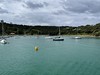 We had no set agenda for our first couple days in New Zealand, intentionally leaving things open to be as lazy or ambitious as we felt
while we got adjusted to the timezone. We chose to take the ferry out to Waiheke Island and spend most of the day there, exploring Oneroa beach
and the cute little town with some nice galleries, restaurants, and shops. We took the bus in to town, but did the 30-minute walk back through
the Atawhai Whenua nature reserve, a lovely walk through fern-filled and bird-filled forest. The 40-minute ferry ride from Auckland to
Waiheke is nice in itself to give you a good sense of Auckland Harbor and its several islands. Dinner we had booked ahead for
Ahi,
one of Auckland's top restaurants with lovely views over the Ferry Building.
We had no set agenda for our first couple days in New Zealand, intentionally leaving things open to be as lazy or ambitious as we felt
while we got adjusted to the timezone. We chose to take the ferry out to Waiheke Island and spend most of the day there, exploring Oneroa beach
and the cute little town with some nice galleries, restaurants, and shops. We took the bus in to town, but did the 30-minute walk back through
the Atawhai Whenua nature reserve, a lovely walk through fern-filled and bird-filled forest. The 40-minute ferry ride from Auckland to
Waiheke is nice in itself to give you a good sense of Auckland Harbor and its several islands. Dinner we had booked ahead for
Ahi,
one of Auckland's top restaurants with lovely views over the Ferry Building.
 In the morning, on the way out of Auckland, we did the short walk up to Maungawhau Mt Eden, an ancient volcanic crater with lovely views over greater Auckland. We then headed to
Hobbiton
to spend an afternoon being utterly charmed by the Lord of the Rings movie set. Even the one in our group who didn't care a bit about LoTR
was delighted by this magical fairy tale setting. From there we continued to Rotorua, where we would spend the next four nights at the
Novotel Rotorua Lakeside, an excellent base for the area (US$229/night).
We had a little time to wander up to the lakefront and walk a bit along the nice newly built walkways there.
(Driving time: 2 hours from Auckland to Hobbiton, then another hour to Rotorua.)
In the morning, on the way out of Auckland, we did the short walk up to Maungawhau Mt Eden, an ancient volcanic crater with lovely views over greater Auckland. We then headed to
Hobbiton
to spend an afternoon being utterly charmed by the Lord of the Rings movie set. Even the one in our group who didn't care a bit about LoTR
was delighted by this magical fairy tale setting. From there we continued to Rotorua, where we would spend the next four nights at the
Novotel Rotorua Lakeside, an excellent base for the area (US$229/night).
We had a little time to wander up to the lakefront and walk a bit along the nice newly built walkways there.
(Driving time: 2 hours from Auckland to Hobbiton, then another hour to Rotorua.)
 Day 4 - Rotorua: Canopy Tour and Glow Worms
This packed day started with a morning walk over to Ohinemutu, a Māori settlement, where we checked out the Te Papaiouru marae (a Māori meeting house)
with its intricate carvings, and the historic St Faith Church with its Māori interior craftwork. We also gawked at all the fumaroles,
places where steam just comes up out of the ground or bubbles up in the water, in this geothermally active area.
In the afternoon, we embarked on the
Ultimate Canopy Tour,
an amazing adventure exploring the forest canopy of a nature reserve by way of ziplines, suspension swing bridges, and catwalks.
In the evening, we set out for a naturalist-led
nocturnal glow worm tour forest walk.
Day 4 - Rotorua: Canopy Tour and Glow Worms
This packed day started with a morning walk over to Ohinemutu, a Māori settlement, where we checked out the Te Papaiouru marae (a Māori meeting house)
with its intricate carvings, and the historic St Faith Church with its Māori interior craftwork. We also gawked at all the fumaroles,
places where steam just comes up out of the ground or bubbles up in the water, in this geothermally active area.
In the afternoon, we embarked on the
Ultimate Canopy Tour,
an amazing adventure exploring the forest canopy of a nature reserve by way of ziplines, suspension swing bridges, and catwalks.
In the evening, we set out for a naturalist-led
nocturnal glow worm tour forest walk.
 Day 5 - Rotorua: Government Gardens and Maori Encounter
We took this as a low-key day, just wandered the town, did some souvenir shopping. We also wandered the Government Gardens,
and admired the Rotorua Museum (currently closed for renovations) which is a splendid example of Elizabethan Revival architecture.
In the evening, we attended
Te Pā Tū
a Māori cultural experience and feast.
Day 5 - Rotorua: Government Gardens and Maori Encounter
We took this as a low-key day, just wandered the town, did some souvenir shopping. We also wandered the Government Gardens,
and admired the Rotorua Museum (currently closed for renovations) which is a splendid example of Elizabethan Revival architecture.
In the evening, we attended
Te Pā Tū
a Māori cultural experience and feast.
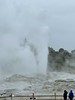 Day 6 - Rotorua: Te Puia and Waimangu
In the morning, we headed to
Te Puia
for different Māori experience. We had a guided tour of the Māori natural reserve near Rotorua,
which included watching the Pohutu geyser in one of its regular eruptions, visiting a kiwi conservation habitat (so cool to see these
iconic birds in real life), and touring the institute of traditional M&amcr;ori crafts of wood carving, stone carving, and weaving.
In the afternoon, it was raining but we drove around the nearby countryside to see the some of the geothermal features like
Waimangu Volcanic Valley
and the Orakei Korako Geothermal Park,
and headed to Lake Taupō for dinner, taking in Huka Falls on the way.
Day 6 - Rotorua: Te Puia and Waimangu
In the morning, we headed to
Te Puia
for different Māori experience. We had a guided tour of the Māori natural reserve near Rotorua,
which included watching the Pohutu geyser in one of its regular eruptions, visiting a kiwi conservation habitat (so cool to see these
iconic birds in real life), and touring the institute of traditional M&amcr;ori crafts of wood carving, stone carving, and weaving.
In the afternoon, it was raining but we drove around the nearby countryside to see the some of the geothermal features like
Waimangu Volcanic Valley
and the Orakei Korako Geothermal Park,
and headed to Lake Taupō for dinner, taking in Huka Falls on the way.
 A noon flight from Rotorua to Christchurch allowed us a leisurely departure from the North Island and arrival in the South in
plenty of time to get settled in our extraordinary hotel for the next three nights,
The Observatory, a boutique hotel built into the historic neo-Gothic former campus of Canterbury College now repurposed as an arts centre, cinema, and wine bar. Like staying at Hogwarts, but with a modern interior makeover (US$185/night for basic room, $277 for suite).
We had time in the afternoon for a stroll along the Avon River and a peek into the botanical gardens across the street, before heading to a tasting menu dinner at
Inati.
A noon flight from Rotorua to Christchurch allowed us a leisurely departure from the North Island and arrival in the South in
plenty of time to get settled in our extraordinary hotel for the next three nights,
The Observatory, a boutique hotel built into the historic neo-Gothic former campus of Canterbury College now repurposed as an arts centre, cinema, and wine bar. Like staying at Hogwarts, but with a modern interior makeover (US$185/night for basic room, $277 for suite).
We had time in the afternoon for a stroll along the Avon River and a peek into the botanical gardens across the street, before heading to a tasting menu dinner at
Inati.
 Day 8 - Akaroa Day Trip (Dolphins and Penguins)
We drove out to the historic harbor town of Akaroa on the Banks peninsula, a beautiful scenic drive up, over, and into the ancient volcanic caldera that forms the harbor. In the afternoon we took a
harbor cruise
where we got to see the Hector's dolphins, an endangered species of dolphin endemic to this area. In the evening, we did a
naturalist-led tour to see the
Pohatu penguins
on the sea, coming ashore, and in their nests. (The drive from Christchurch to Akaroa is about 90 minutes each way.)
Day 8 - Akaroa Day Trip (Dolphins and Penguins)
We drove out to the historic harbor town of Akaroa on the Banks peninsula, a beautiful scenic drive up, over, and into the ancient volcanic caldera that forms the harbor. In the afternoon we took a
harbor cruise
where we got to see the Hector's dolphins, an endangered species of dolphin endemic to this area. In the evening, we did a
naturalist-led tour to see the
Pohatu penguins
on the sea, coming ashore, and in their nests. (The drive from Christchurch to Akaroa is about 90 minutes each way.)
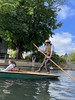 Day 9 - Christchurch (Punting, Cathedrals)
We explored Christchurch, delving deeper into the amazing botanic gardens, checking out the Canterbury Museum, going
punting on the Avon (an iconic Christchurch activity), lunching at the Riverside Markets, and visiting
the reconstruction site of the classic Christchurch cathedral (destroyed in a 2011 earthquake) and the
"transitional" cathedral built of cardboard and shipping containers that has temporarily replaced it.
Day 9 - Christchurch (Punting, Cathedrals)
We explored Christchurch, delving deeper into the amazing botanic gardens, checking out the Canterbury Museum, going
punting on the Avon (an iconic Christchurch activity), lunching at the Riverside Markets, and visiting
the reconstruction site of the classic Christchurch cathedral (destroyed in a 2011 earthquake) and the
"transitional" cathedral built of cardboard and shipping containers that has temporarily replaced it.
 We drove from Christchurch to Lake Tekapo, with a lovely lunch stop at
Barker's in Geraldine.
Our home for the next couple of nights in this area was
Hazel's House,
a 4-bedroom, 2.5-bath rental home (US$186/night split across 2 couples).
(This lake town is like a New Zealand version of Lake Arrowhead, not very many hotels, more rental homes
catering to weekend vacationers from Christchurch as well as international travelers.) We had time to wander down by the vivid blue lake
(the striking color is caused by "glacial dust" from the glacier runoff that feeds tha lake), to see the charming chapel and sheepdog statue,
and the glorious profusion of lupines that were in bloom all around the lake.
In the evening, we drove to Lake Pukaki (35 minutes) to the exclusive
Mt Cook Lakeside Retreat
where we enjoyed a very memorable dinner in a gorgeous setting.
We drove from Christchurch to Lake Tekapo, with a lovely lunch stop at
Barker's in Geraldine.
Our home for the next couple of nights in this area was
Hazel's House,
a 4-bedroom, 2.5-bath rental home (US$186/night split across 2 couples).
(This lake town is like a New Zealand version of Lake Arrowhead, not very many hotels, more rental homes
catering to weekend vacationers from Christchurch as well as international travelers.) We had time to wander down by the vivid blue lake
(the striking color is caused by "glacial dust" from the glacier runoff that feeds tha lake), to see the charming chapel and sheepdog statue,
and the glorious profusion of lupines that were in bloom all around the lake.
In the evening, we drove to Lake Pukaki (35 minutes) to the exclusive
Mt Cook Lakeside Retreat
where we enjoyed a very memorable dinner in a gorgeous setting.
 In the morning, we did the Grand Traverse with
Air Safaris,
an hour long aerial tour up and around the dramatic snow-covered mountain peaks of Aoraki Mt Cook National Park (the "southern Alps") and a good look at the Tasman and Franz Josef glaciers. In the afternoon, we drove up to Mt Cook Village and its historic Hermitage Hotel, where we took the
Glacier Explorers tour combining
a beautiful hike through alpine terrain to Tasman Lake, where a small pontoon boat took us out to see (and touch and taste) some icebergs
and to get a good look at the Tasman Glacier. (Drive from Lake Tekapo to Mt Cook Village about 1:10 each way.)
In the morning, we did the Grand Traverse with
Air Safaris,
an hour long aerial tour up and around the dramatic snow-covered mountain peaks of Aoraki Mt Cook National Park (the "southern Alps") and a good look at the Tasman and Franz Josef glaciers. In the afternoon, we drove up to Mt Cook Village and its historic Hermitage Hotel, where we took the
Glacier Explorers tour combining
a beautiful hike through alpine terrain to Tasman Lake, where a small pontoon boat took us out to see (and touch and taste) some icebergs
and to get a good look at the Tasman Glacier. (Drive from Lake Tekapo to Mt Cook Village about 1:10 each way.)
 In the morning, we drove out to the Omerama Clay Cliffs, a lovely hike amidst more profusions of lupine and other wild flowers
to a striking clay rock formation. In Omarama, we had a lovely lunch at the Pink Glider Cafe, at the glider airport (a major site for
glider planes). We then continued on to our next destination, Lake Wanaka, another beautiful lake in the foothills
of the southern Alps, this one the gateway to Mount Aspiring National Park. We had time for a little walk along the lakeshore
and to see the Instagram-famous
#thatwanakatree
before taking a lovely dinner at the
Wineglass Cafe in the Edgewater Hotel.
Our home for the night in Lake Wanaka was the
, a motel on the outside (very convenient car parking in front of each room)
with unexpectedly high-end furnishings on the inside (US$145/night).
(Total drive time today was 2:20)
In the morning, we drove out to the Omerama Clay Cliffs, a lovely hike amidst more profusions of lupine and other wild flowers
to a striking clay rock formation. In Omarama, we had a lovely lunch at the Pink Glider Cafe, at the glider airport (a major site for
glider planes). We then continued on to our next destination, Lake Wanaka, another beautiful lake in the foothills
of the southern Alps, this one the gateway to Mount Aspiring National Park. We had time for a little walk along the lakeshore
and to see the Instagram-famous
#thatwanakatree
before taking a lovely dinner at the
Wineglass Cafe in the Edgewater Hotel.
Our home for the night in Lake Wanaka was the
, a motel on the outside (very convenient car parking in front of each room)
with unexpectedly high-end furnishings on the inside (US$145/night).
(Total drive time today was 2:20)
 Day 13 - Drive to Te Anau
In the morning heading out of Lake Wanaka, we took a fascinating tour and tasting at
The Cardrona Disillery
who are just now bringing out their first aged batches of whisky in the finest Scottish tradition, along
with excellent gin and vodka.
We stopped for a well-recommended lunch at
Provisions of Arrowtown
and took some time to walk the main street of that charming town, before driving on to our next destination, Te Anau,
the lakeside gateway to the Fiordlands. Our rooms for the next two nights were the
Lakefront Lodge in the heart of Te Anau (US$171/night).
We enjoyed an evening stroll along the shore of the beautiful lake, watching the birds and the boats,
and a visit to the Te Anau Bird Sanctuary to see some rare endemic birds like the takahē.
(Total drive time today was 2:50)
Day 13 - Drive to Te Anau
In the morning heading out of Lake Wanaka, we took a fascinating tour and tasting at
The Cardrona Disillery
who are just now bringing out their first aged batches of whisky in the finest Scottish tradition, along
with excellent gin and vodka.
We stopped for a well-recommended lunch at
Provisions of Arrowtown
and took some time to walk the main street of that charming town, before driving on to our next destination, Te Anau,
the lakeside gateway to the Fiordlands. Our rooms for the next two nights were the
Lakefront Lodge in the heart of Te Anau (US$171/night).
We enjoyed an evening stroll along the shore of the beautiful lake, watching the birds and the boats,
and a visit to the Te Anau Bird Sanctuary to see some rare endemic birds like the takahē.
(Total drive time today was 2:50)
 Day 14 - Milford Sound Piopiotahi
This day was devoted to driving out to the famous Milford Sound Piopiotahi, where we had booked a boat on
Cruise Milford. Milford Sound is a stunning place, often compared to the Norwegian fjords,
though the more familiar resemblance for me was Yosemite Valley (if it were half-filled with sea water). The drive from Te Anau is about two hours,
but it is a spectacular drive in itself, mostly within Fiordland National Park, and you'll want to allow for stops to look at waterfalls
and take short hikes in the magical beech forests. We got back in time for a very nice dinner at the
Redcliff Cafe.
Day 14 - Milford Sound Piopiotahi
This day was devoted to driving out to the famous Milford Sound Piopiotahi, where we had booked a boat on
Cruise Milford. Milford Sound is a stunning place, often compared to the Norwegian fjords,
though the more familiar resemblance for me was Yosemite Valley (if it were half-filled with sea water). The drive from Te Anau is about two hours,
but it is a spectacular drive in itself, mostly within Fiordland National Park, and you'll want to allow for stops to look at waterfalls
and take short hikes in the magical beech forests. We got back in time for a very nice dinner at the
Redcliff Cafe.
 Day 15 - Kepler Track and Drive to Queenstown
In the morning, just outside of Te Anau, we stopped at the Rainbow Reach along the Waiau River, where we could sample a short bit of the
famous Kepler Track (one of New Zealand's famous "great walks", multi-day hikes with huts along the way). The river and forest are beautiful,
and you can see why this was one of the many Lord of the Rings film locations. From there, we made the 2-hour drive from Te Anau to Queenstown,
much of that scenic along the vast Lake Wakatipu. We checked in to our lodgings for the next two nights, a splurge luxury 2-bedroom apartment at
The Rees Hotel
with a deck with breathtaking views over the lake and across to The Remarkables mountain range (US$293/couple/night).
We enjoyed an extraordinary dinner in the hotel's True South dining room.
Day 15 - Kepler Track and Drive to Queenstown
In the morning, just outside of Te Anau, we stopped at the Rainbow Reach along the Waiau River, where we could sample a short bit of the
famous Kepler Track (one of New Zealand's famous "great walks", multi-day hikes with huts along the way). The river and forest are beautiful,
and you can see why this was one of the many Lord of the Rings film locations. From there, we made the 2-hour drive from Te Anau to Queenstown,
much of that scenic along the vast Lake Wakatipu. We checked in to our lodgings for the next two nights, a splurge luxury 2-bedroom apartment at
The Rees Hotel
with a deck with breathtaking views over the lake and across to The Remarkables mountain range (US$293/couple/night).
We enjoyed an extraordinary dinner in the hotel's True South dining room.
 Day 16 - Explore Queenstown
We enjoyed a leisurely day exploring Queenstown, starting with the gondola ride up to the top of Bob's Peak, where we had spectacular views
over Lake Wakatipu and the surrounding mountains, and we tried the luge course. From both above and below, we watched people parasailing off
the top of the mountain and landing down in town, but we weren't quite brave enough to try it ourselves. For dinner, we shared the famous roast lamb at
Pedro's By The Lake.
Day 16 - Explore Queenstown
We enjoyed a leisurely day exploring Queenstown, starting with the gondola ride up to the top of Bob's Peak, where we had spectacular views
over Lake Wakatipu and the surrounding mountains, and we tried the luge course. From both above and below, we watched people parasailing off
the top of the mountain and landing down in town, but we weren't quite brave enough to try it ourselves. For dinner, we shared the famous roast lamb at
Pedro's By The Lake.
 Day 17 - Queenstown Bonus Day
We had time before our late afternoon flight home, so in the morning we took a scenic (if rainy) drive up the lake to Glenorchy, before
returning to Queenstown to see why people waited in such long lines for
Fergburger (they are good!),
and then packing up and heading to the airport. Alas, we discovered at the airport that our Queenstown-Auckland leg was canceled,
and Air New Zealand had rebooked us to fly home on the same flights the next day. They very graciously put us up for another night at the
Sofitel Queenstown, right in the heart of town. Once resettled, we spent the rest
of that day wandering through the expansive and beautiful Queenstown Gardens, and enjoying our "bonus day".
Day 17 - Queenstown Bonus Day
We had time before our late afternoon flight home, so in the morning we took a scenic (if rainy) drive up the lake to Glenorchy, before
returning to Queenstown to see why people waited in such long lines for
Fergburger (they are good!),
and then packing up and heading to the airport. Alas, we discovered at the airport that our Queenstown-Auckland leg was canceled,
and Air New Zealand had rebooked us to fly home on the same flights the next day. They very graciously put us up for another night at the
Sofitel Queenstown, right in the heart of town. Once resettled, we spent the rest
of that day wandering through the expansive and beautiful Queenstown Gardens, and enjoying our "bonus day".
 Day 18 - Fly Home
We once again had time before we had to get to the airport, so we walked over the
Kiwi Park
bird sanctuary, where we got to see not only the iconic kiwis, but a number of other endemic birds and reptiles,
including the fascinating tuatara. This time our flights did come off as planned, and we had smooth flights from Queenstown to Auckland (1:45 flight time)
and then Auckland direct home to LAX (12 hours).
Day 18 - Fly Home
We once again had time before we had to get to the airport, so we walked over the
Kiwi Park
bird sanctuary, where we got to see not only the iconic kiwis, but a number of other endemic birds and reptiles,
including the fascinating tuatara. This time our flights did come off as planned, and we had smooth flights from Queenstown to Auckland (1:45 flight time)
and then Auckland direct home to LAX (12 hours).
Day 1 - Arrive in AucklandDay 2 - Explore Waiheke Island
We had no set agenda for our first couple days in New Zealand, intentionally leaving things open to be as lazy or ambitious as we felt
while we got adjusted to the timezone. We chose to take the ferry out to Waiheke Island and spend most of the day there, exploring Oneroa beach
and the cute little town with some nice galleries, restaurants, and shops. We took the bus in to town, but did the 30-minute walk back through
the Atawhai Whenua nature reserve, a lovely walk through fern-filled and bird-filled forest. The 40-minute ferry ride from Auckland to
Waiheke is nice in itself to give you a good sense of Auckland Harbor and its several islands. Dinner we had booked ahead for
Ahi,
one of Auckland's top restaurants with lovely views over the Ferry Building.
Day 3 - Hobbiton en route to Rotorua
In the morning, on the way out of Auckland, we did the short walk up to Maungawhau Mt Eden, an ancient volcanic crater with lovely views over greater Auckland. We then headed to
Hobbiton
to spend an afternoon being utterly charmed by the Lord of the Rings movie set. Even the one in our group who didn't care a bit about LoTR
was delighted by this magical fairy tale setting. From there we continued to Rotorua, where we would spend the next four nights at the
Novotel Rotorua Lakeside, an excellent base for the area (US$229/night).
We had a little time to wander up to the lakefront and walk a bit along the nice newly built walkways there.
(Driving time: 2 hours from Auckland to Hobbiton, then another hour to Rotorua.)
Day 4 - Rotorua: Canopy Tour and Glow WormsDay 5 - Rotorua: Government Gardens and Maori EncounterDay 6 - Rotorua: Te Puia and WaimanguDay 7 - Fly Rotorua to Christchurch
A noon flight from Rotorua to Christchurch allowed us a leisurely departure from the North Island and arrival in the South in
plenty of time to get settled in our extraordinary hotel for the next three nights,
The Observatory, a boutique hotel built into the historic neo-Gothic former campus of Canterbury College now repurposed as an arts centre, cinema, and wine bar. Like staying at Hogwarts, but with a modern interior makeover (US$185/night for basic room, $277 for suite).
We had time in the afternoon for a stroll along the Avon River and a peek into the botanical gardens across the street, before heading to a tasting menu dinner at
Inati.
Day 8 - Akaroa Day Trip (Dolphins and Penguins)Day 9 - Christchurch (Punting, Cathedrals)Day 10 - Drive to Lake Tekapo
We drove from Christchurch to Lake Tekapo, with a lovely lunch stop at
Barker's in Geraldine.
Our home for the next couple of nights in this area was
Hazel's House,
a 4-bedroom, 2.5-bath rental home (US$186/night split across 2 couples).
(This lake town is like a New Zealand version of Lake Arrowhead, not very many hotels, more rental homes
catering to weekend vacationers from Christchurch as well as international travelers.) We had time to wander down by the vivid blue lake
(the striking color is caused by "glacial dust" from the glacier runoff that feeds tha lake), to see the charming chapel and sheepdog statue,
and the glorious profusion of lupines that were in bloom all around the lake.
In the evening, we drove to Lake Pukaki (35 minutes) to the exclusive
Mt Cook Lakeside Retreat
where we enjoyed a very memorable dinner in a gorgeous setting.
Day 11 - Aoraki Mt Cook Air Safari and Glacier Tour
In the morning, we did the Grand Traverse with
Air Safaris,
an hour long aerial tour up and around the dramatic snow-covered mountain peaks of Aoraki Mt Cook National Park (the "southern Alps") and a good look at the Tasman and Franz Josef glaciers. In the afternoon, we drove up to Mt Cook Village and its historic Hermitage Hotel, where we took the
Glacier Explorers tour combining
a beautiful hike through alpine terrain to Tasman Lake, where a small pontoon boat took us out to see (and touch and taste) some icebergs
and to get a good look at the Tasman Glacier. (Drive from Lake Tekapo to Mt Cook Village about 1:10 each way.)
Day 12 - Drive to Wanaka
In the morning, we drove out to the Omerama Clay Cliffs, a lovely hike amidst more profusions of lupine and other wild flowers
to a striking clay rock formation. In Omarama, we had a lovely lunch at the Pink Glider Cafe, at the glider airport (a major site for
glider planes). We then continued on to our next destination, Lake Wanaka, another beautiful lake in the foothills
of the southern Alps, this one the gateway to Mount Aspiring National Park. We had time for a little walk along the lakeshore
and to see the Instagram-famous
#thatwanakatree
before taking a lovely dinner at the
Wineglass Cafe in the Edgewater Hotel.
Our home for the night in Lake Wanaka was the
, a motel on the outside (very convenient car parking in front of each room)
with unexpectedly high-end furnishings on the inside (US$145/night).
(Total drive time today was 2:20)
Day 13 - Drive to Te AnauDay 14 - Milford Sound PiopiotahiDay 15 - Kepler Track and Drive to QueenstownDay 16 - Explore QueenstownDay 17 - Queenstown Bonus DayDay 18 - Fly HomeNotes on the itinerary
Overall, we were extremely happy with this itinerary. We'd recommend all of the hotels and experiences. None of the driving times were onerous.
November (late spring in NZ) was a good time, not quite the busy summer season, flowers in bloom, and lots of baby lambs and birdlings.
Pro tip: Since we arrived in Auckland at 6am, we intentionally booked the hotel for the previous night just so we could arrive early in the morning
and have immediate access to our room, rather than having to wait until the afternoon to check in. That's a trade-off of cost for comfort
that we've made before for early arrivals, and never regretted it. A nap if you need it and a hot shower makes that arrival so much better.
Regrets and Things We Might Do Differently
No regrets, this worked out great.
Things I'd do different would just be extensions: would have loved to have got down to Tongariro National Park for a night or two in the
Chateau Tongariro and hiking in the park's dramatic volcanoes (this would be a spur trip out of Rotorua). Could have spent another night
in Lake Wanaka, getting into Mount Aspiring National Park and Rob Roy Glacier. Wouldn't have minded another night in Te Anau to explore
that lovely area. And we missed getting to see the
Dark Sky Project in Lake Tekapo
because we were there on the days it was closed (though it wouldn't have mattered because it was cloudy).
Weather note: it will rain at some point during your trip, so pack accordingly, be willing to do stuff anyway if it's not raining too hard,
and just be flexible in your plans.
Notes on Cost
The total cost of this trip was about $9600 per couple (two couples traveling together, including coach airfare out of LAX), including about $1500/person airfare, $4000/couple on lodging (average room cost $240/night for mostly higher end hotels), $2460 for rental cars and gas (we rented oversize 7-passenger vehicles to accommodate 4 people with large luggage), and $1400/couple for "experiences" (ziplining, boat cruises, etc). Not included in that was $2100/couple for food, about $115/day. Prices for everything were much lower than at home. The NZ$ was about US$0.60, and posted prices looked pretty normal, so it's like everything was on sale 40% off. We dined at some very high-end restaurants, and even those were about $100/person all in. (Note that in New Zealand, tipping is not a thing. They pay their staff a living wage and don't expect tips.)
Friday, April 08, 2022
FILM: Everything Everywhere All At Once

Friday, March 04, 2022
FILM: Cyrano
 Friday afternoon movie - we both really enjoyed Cyrano, which just opened this weekend, with Peter Dinklage in the title role. We'd heard a less than lukewarm review of it on NPR, so went in with lowered expectations, but just looking for a little escape and romance. We were delighted and transported. Dinklage, as any Game of Thrones fan knows, is capable of greatness, and he is superb in this role - charming, full of panache, and so passionate. Haley Bennett as Roxanne is every bit his match, and Kelvin Harrison Jr is a sweet Christian to complete this triangle. The costuming and cinematography is absolutely gorgeous (filmed in Sicily, which we recognized from our recent trip), making it a feast for the eyes as the story works your heart and tears. The songs and the singing were lovely and moving. Bennett has a beautiful voice, and while Dinklage certainly doesn't have a Broadway voice, he definitely wasn't Pierce Brosnan either, and the authenticity of his voice didn't offend my ear. Definitely recommend.
Saturday, January 22, 2022
FILM: The Power of the Dog
 Last night we watched The Power of the Dog, which has a lot of Oscar hype. It did indeed have some great performances, fine direction (Jane Campion), gorgeous cinematography, and an excellent score. The film is set in Montana 1923, following two brothers who run a prosperous cattle ranch, one of whom, George (an understated performance by Jesse Plemons), marries a widow with a young adult son. The single brother, Phil (exquisitely performed by Benedict Cumberbatch), is a study in repression and tortured masculinity, with strong ideas of what it means to be a man, and an ever-present reverence for a long-gone mentor named Bronco Henry (visually represented by Henry’s empty saddle). Phil is intimidating to George’s new wife Rose (evocatively portrayed by Kirsten Dunst) and to her effeminate son Peter, and drives Rose to drink. The film follows this character tension amidst beautiful scenes of cowboy / ranch life in the very photogenic Montana hills. It’s a shame we saw this at home, as it really deserves the big screen. It is vividly filmed, and you almost feel the wind, taste the dust, and smell the cattle. The time, place, and feel are reminiscent of Brokeback Mountain (and geographically these characters could well have run into Jack and Ennis), but there’s little romance to be found here. If you were looking for an action-packed western, this is not your film, but if you appreciate tight character studies, this is more that. As far as action, relatively little actually happens in this slow-developing story, which is carried by the great performances, beautiful scenery, and score. To be honest, even three-quarters of the way through, I could have easily turned it off. And yet I am glad that I stuck with it to the unexpected end, and it stayed with me, making me think about it.
Saturday, June 05, 2021
FILM: Cruella
Cruella is as wicked fun as it looks, and Emma Stone is delightfully wicked in bringing to life this re-envisioned classic Disney villain. Evil characters are so much more interesting than good ones, and especially when writers dream up intriguing back stories where people aren’t quite as black-and-white as a 1961 Disney film may have made them out to be. Especially when they are foiled against an even more evil villain in Emma Thompson’s fantastically wicked baroness, who imperiously rules over a London fashion empire, whom a young Cruella aspires to be like and eventually take down. Using the cut-throat high fashion industry as the set is brilliant for this story, and comparisons to The Devil Wears Prada are apt, especially since this film was co-written by the same writer. Emma Thompson’s baroness makes even Meryl Streep’s fashion queen seem warm. The 1980s London punk aesthetic is the perfect look for the young upstart designer, with a gothy parade of fantastic costumes, and there’s just something about London that makes for charming thieves and grifters, with fun heisty bits like at times like a lighter version of Ocean’s Eight. The twisted plot has enough twists to keep this villainous prequel intriguing to the end, with some nice puzzle pieces falling into place to set up the classic Disney film.

Saturday, May 15, 2021
FILM: Los Hermanos
 If you like modern Cuban classical music, or if you just enjoy a good uplifting story, you should see Los Hermanos (The Brothers), a documentary about two Cuban brothers, both extraordinary musicians, one a violinist who made his life in the US and the other a composer and pianist who made his life in Cuba. After decades of limited contact, the two finally got the opportunity to make music together in a joyful reunion. Through some improbably obtained archival footage, we get glimpses of their childhood in Havana, their musical education, and their father who is a notable Cuban composer and conductor. The film beautifully presents Cuban life in all its contradictions, the joy and the privations, the cultural richness and the bureaucracy. But the heart of the story is the music and the passion for making it, and the music these brothers are making is vibrant and riveting. There are some great scenes that really give insight into how musicians talk to each other as they are bringing a piece of music to life. There is a joy in life that they exude in their music, and they wear their hearts on their sleeves, on their strings, and in their scores. We came away from this film smiling, humming, and filled with their contagious joy. We were lucky to attend the film premiere in Santa Monica, where we could enjoy this music-filled film in full theater sound, and afterward there was a Q&A with the filmmakers Ken Schneider and Marcia Jarmel hosted by NPR arts journalist Mandelit Del Barco. (Ken is an old high school friend, and I couldn’t be more proud to know Ken and Marcia after seeing this fantastic work!)
Saturday, May 01, 2021
FILM: Limbo
 From the trailer, we expected Limbo would be more funny and more uplifting than it was. What we found instead was a more thoughtful and existential reflection on the experience of refugees in the limbo of awaiting adjudication of their status. The story centers on Omar, a young Syrian man from a lineage of famous musicians, who carries his “oud” (a lute-like instrument) with him everywhere he goes, but never plays it. He lives with several other would-be immigrants from various places on a remote windswept Scottish island, where they are not allowed to work, and must simply wait for months or perhaps years for their status to be resolved. They are met with varying reactions from the locals, ranging from true sympathy and kindness to suspicion and outright racism. A class meant to teach them about British culture provides some of the lighter moments. The real humanity is revealed slowly as we get glimpses of these characters, their paths to this place, their motivations, and their precarious hopes. The film crafts a sense of the absurdist suspense of these refugees trying to hold on to hope in this limbo of unknown duration and outcome, where peers are sometimes taken away with no explanation, and the rest remain like the characters in Waiting For Godot. The setting of the remote barren island perfectly enhances the bleakness. An improbable looking phonebooth in the middle of nowhere provides occasional communication with distant families, unless they want to hike up to the top of the local hilltop which is the one spot on the whole island with cellular reception. Omar walks through this life in a sort of jet-lagged daze, like Bill Murray in “Lost in Translation”. He wistfully remembers the apricots from his family’s fruit trees, and the sweets his grandmother made from them. There’s a Syrian expression — “tomorrow there will be apricots” — meant to offer hope when things look bleak. He never heard the expression growing up, because, he confesses, “there were always apricots.” A cast on his hand has kept him from playing his oud, but when the cast is removed, it turns out there’s an emotional cast on his spirit which is really what keeps him from playing his music again. He needs to rediscover the slender thread of hope that has lead him this far. The end is neither a Hollywood ending nor a French ending, but it is a thing of quiet beauty. While this was not what we expected, I was glad I saw it.
Friday, April 30, 2021
ART: Amy Sherald and Lygia Pape at Hauser & Wirth

I celebrated my second Moderna shot on Friday by making my first visit to an art gallery in over a year. At Hauser & Wirth in DTLA Arts District, they have a showing of the portrait artist Amy Sherald, who was boosted into national prominence a few years ago with her commissioned official portrait of First Lady Michelle Obama. This show of five of her recent works is called The Great American Fact. Her distinctive style is a simplified realism, working in bold colors and clean simple shapes, reminiscent of Henri Rousseau, but focused on portraits of African-Americans in an idealized and iconographic visualization. Her works are striking, and not just because of their bold colors and monumental scale (approaching life size). It is her depiction of African-Americans at leisure inhabiting clothes, spaces, poses, and symbols that are traditionally white cultural property. The juxtaposition made me catch my breath and wonder: this is something I haven’t seen before, but why should it be so unexpected? The settings and symbols are classic Americana: Norman Rockwell-esque white picket fences and yellow clapboard houses, sunflowers, 1950s classic bicycles and cars, a James Dean style denim jacket, a Barbie pink outfit, a pink flamingo, a composition that calls to mind American Gothic. The relaxed poses have a natural feel that just adds to the subversiveness. And in another element of her signature style, skin tones are all rendered in grisaille, literally taking away the color of the skin, and creating an intriguing contrast with the strong colors used everywhere else. The picture of the surfers on the beach was particularly striking to me in the context of the recently resurfaced story of Bruce’s Beach, a thriving Black-owned beach resort in Manhattan Beach in the 1910s/1920s, one of the few places in southern California where Blacks could enjoy the beach at that time, which was run out of town with government sanction in a shameful example of racial injustice. Sherald says she paints the world she wants to see. Her scenes, including her beach, feel more like New England (it’s that Norman Rockwell vibe), and she may draw more positive inspiration from Martha’s Vineyard, which (unexpectedly to those unfamiliar with the history) does have a better example in Oak Bluffs, a town where African-Americans have historically owned, lived, and vacationed. Wherever their inspiration, I found her portraits visually appealing and thought-provoking.

They also had another exhibition, of the Brazilian artist Lygia Pape, which I was more mixed about. In one darkened gallery was a lone engaging abstract work called “Ttéia 1, C”, a composition of “silver thread, wood, nails, and light”. The silver threads are arranged in parallel floor-to-ceiling lines to create two diagonal columns that intersect each other. In the dark gallery, they are invisible except as spotlights catch them, so you only get glimpses of the overall form at any one time, and the visible portion shifts dynamically as you walk around it. It’s a beautiful visual, and it invites (or perhaps even compels) your interaction by walking all around it and raising and lowering your perspective to see how it changes. In the second gallery, there were a series of works all on the theme of the Tupinambá, an indigenous people of Brazil reputed to have been cannibals. The Tupinambá are represented in her work by red feathers, and the art pieces mostly comprised large balls covered mostly or entirely in red feathers. In some instances, there were single red-feathered balls with random body parts sticking out – a foot, a hand, or breasts – in poses that seemed not to be appendages of the spheres, but as remnants of what the people-eating spheres had consumed. A large installation comprised a large number of these spheres all together on top of a large tarp, with bits of bones sticking out of them. There were also a few spheres under the tarp, and those spheres were only partly or barely covered in red feathers, and otherwise dark. If you looked closer at the dark spheres under the tarp, they were covered with cockroaches, I suppose suggesting that the vibrant red cannibals were themselves ultimately going to become eaten by bugs. Interesting in concept, if not so visually appealing.
Fortunately, I didn’t view them in that order, the cannibals consumed by roaches weren’t the last thing I saw, and my appetite was intact to wander over to Salt & Straw to experience a different kind of art. At those masters of ice cream, I ventured to try a flavor made from Oregon Bartlett pears with blue cheese. It was excellent. The pear flavor really came through in the ice cream, with goodly sized chunks of pear in it, and occasional small bits of blue cheese, just enough for accent but not overpowering the more subtle pear flavor.
Saturday, April 24, 2021
FILM: 2021 Oscar-Nominated Animated Shorts
For many years now, we have enjoyed a secret: the pleasure of viewing the Oscar-nominated short films. Last night we viewed the 2020 crop of animated short films. The joy of a mini-festival of short films is that you can experience such a range, from pure light-hearted comedy in one moment to wistful, mysterious, or deeply moving in another. Burrow started us off with a warm smile, a charming story of a small rabbit armed with a shovel and a hand-drawn plan for its dream home, running into all sorts of unexpected neighbors also living beneath the earth. We were then jolted into the acid trip dreamscape of Genius Loci, which starts off as meditative poetry and morphs into a psychotic break. Emotionally it is unsettling, with people and recognizable elements of urban life morphing into a very subjective first-person experience of mental illness. Artistically, it may have been the most beautiful and intriguing, alternating fluidly between fully colored-in watercolor-like scenes and abstract partial sketches. Opera was one long pan down a vast pyramid, a fantastical cross between Hieronymous Bosch and Rube Goldberg, with hundreds of figures moving through bizarre rituals in different chambers of the pyramid, with some great Sisyphean battle at its base between fire and cold. If Anything Happens I Love You was a beautiful and poignant story without words, in which we are shown the rift between a husband and wife, the two fleshed out characters avoiding each other in silent tension while shadow figures above them express emotions and flickers of memories. As the shape of the hole in their hearts is slowly revealed, it does not just tug at our heartstrings, but shoots our heart like a bullet. Mercifully this was followed by another light-hearted entry, Yes-People, in which vividly humorous claymation-style people inhabiting the same apartment building go through their day saying only “yes” (or its Icelandic equivalent) with various amusing expressions and intonations. The presentation also included three films that had been short-listed but didn’t get nominated. Kapaemahu enacts the legend of four “mahu” (third-gender persons) who came from Tahiti to Hawaii in ancient times and were great healers, ultimately transferring their healing powers to four great rocks before disappearing. The animation is beautifully done in warm tones and the figures reminiscent of cave pictograms, and the story behind it is fascinating. The actual rocks can be seen in Waikiki, and the legend is a documented oral tradition that is narrated in this film in the Niihau dialect of Hawaiian (the only continuously spoken form of Hawaiian and probably closest to what would have been spoken in the time of the healers). The Snail and The Whale is an animated version of a children’s book, a lovely story narrated in verse by Diana Rigg, with character voices by Sally Hawkins and Rob Brydon, with delightful seascape imagery, like a shorter version of Finding Nemo. Finally, To: Gerard is another charming story, this one about a would-be magician working in a mail room, his childhood inspiration for magic tricks, and how he passes on the legacy.


Subscribe to:
Posts (Atom)