Saturday, August 19, 2017

About those Confederate monuments

So let's talk about Robert E. Lee. Certainly he was an important historical figure as the leading general of the Confederacy. And by most accounts I've read, he worked honorably after the war, both as president of what is now Washington and Lee University, and toward the cause of reconciling the union. He is reported to have said “before the war, I was a Virginian, but after the war, I was an American.” In his own time, Lee was opposed to erecting monuments valorizing himself or other Confederate leaders. If he were alive today, he would most likely be appalled by the misappropriation of his good name and likeness as a symbol of white supremacy, and he would be pulling down those statues himself.

Let's be frank. Those monuments are not about honoring a valorous general, and they're certainly not about his honorable post-war deeds. Most (not all, but most) of those monuments were erected during the Jim Crow era as a way to send a message to southern blacks to know their place. At the same time, reverence for a Confederate battle flag was invented as a more genteel daytime cloak for those who wear sheets and robes at night. And the monuments are just a coded form of a burning cross with the plausible deniability of “heritage”. People have varying degrees of conscious complicity in this, but this form of “Southern pride” is at best a kind of collective willful amnesia about the ugly message being sent here. Look too closely through the veneer of nostalgia, and at its most charitable interpretation the message is “we liked it better before the war, and we wish we could go back to that”. Think it through, and it's hard to avoid the implication: “unchained blacks have no place here”.

Those who think it's really more innocent than that need to ask themselves a number of questions. If this is not about valorizing the Confederacy itself, why all the monuments to Jefferson Davis, the not particularly competent president of the Confederacy? Or Roger Taney, the Supreme Court Justice who gave us the ignoble Dred Scott decision? General Lee may be statue-worthy, but what's up with those guys? Why were so many of these monuments erected in the 1910s, 20s, 30s, and even the 1950s? What do you suppose it really meant to erect such monuments in the 1950s? And why statues for every general and colonel in the Civil War? Is there a reason those men should be honored way more than southern generals in other wars? Why are there overwhelmingly more statues of Lee than there are of Admiral Nimitz or Black Jack Pershing, both southerners? And if it's about the singular importance of the Civil War in our history, why are there way more statues of Lee than there are of Grant in the north? And if it's about “southern pride”, then why aren't southerners anywhere near as proud of their great explorers (Lewis and Clark), authors (Faulkner, Harper Lee, Tennessee Williams), inventors and scientists (George Washington Carver, McCormick Bros, Michael DeBakey), and other honor-worthy people (Helen Keller, Chuck Yeager)? There is clearly a peculiar fixation on Confederate leaders that is not just about “history” and “heritage”. We need to call this out for what it is.

When Hungary finally broke free of Communism, Budapest was adorned with monumental statues of Lenin, Marx, and other Communist heroes. They rightly wanted no longer to give those a place of honor in their city, so they built a place called Memento Park on the outskirts of town, where all of these old Communist monuments are on display in a kind of outdoor museum, where that part of their history can be preserved, but with the proper detachment and no inappropriate place of honor. That's what we need to do with all of this Jim Crow era “heritage”. Segregated water fountains are part of that same heritage too, and a few of those should be preserved as well, in museums, for history sake. Confederate flags and Confederate monuments should be viewed no differently than segregated water fountains.

Meanwhile, we need a reboot, “Southern Pride 2.0”. There is much worth honoring that has come from the South (see list above of statue-worthy Southerners, of which that is only a start). Let's honor that, and ditch this disingenuous nostalgia for a “peculiar institution”.

Sunday, April 16, 2017

Remembering Fred Borsch


I was saddened to read of the passing of Fred Borsch, whose mark left on the world is beautifully described in this LA Times obituary. I loved the story of him bringing the Archbishop of Canterbury into one of LA's sketchiest neighborhoods to give him a new perspective. I was acquainted with Rev. Borsch at Princeton, where he was the Dean of the Chapel when I studied there in the early 1980s, and his son Ben was a classmate. He was a kind, gentle-spoken man who did indeed ask people to call him Fred. If you picture someone like Father Mulcahy on the old MASH TV series, you wouldn't be far off. But I think he made a mark wherever he went. I will always be grateful that, under the sponsorship of the Borsch's Office of the Chapel, a space in the basement of Murray-Dodge Hall was set up to create a café, where tea and fresh baked goods and occasional live music were on offer, but more importantly, an alternative social space for people who for various reasons didn't entirely fit into Princeton's regular social scene. That doesn't sound like any big thing today, but it's hard to project ourselves back to a time before there was any Starbucks, before there was a ubiquitous Internet, and before Princeton had a Gay and Lesbian Center (actually before Princeton even had a real student center at all). Back then, that café was a haven for, among others, a whole circle of students tiptoeing to terms with their homosexuality. It was quietly subversive and essential. And looking back, I think that Borsch probably understood that even better than I did at the time.

Flash forward 20 years to 2001, and I just missed meeting Borsch again, although I discovered his handprints when I moved to Echo Park, a now trendy but then rather edgy barrio near downtown Los Angeles. As an Angeleno, I had been well aware of the construction in the 1990s of the controversial Catholic Cathedral of Our Lady of the Angels downtown, a dramatic modernist architectural landmark. But it wasn't until I moved to Echo Park that I became aware of the Episcopal Cathedral Center of St. Paul, also constructed in the 1990s, a modest set of buildings that wouldn't draw particular attention to drivers-by let alone international tourists. I think the Catholic and the Episcopal churches both have strong traditions of "high church" majesty as well as social justice. But I find it emblematic that while then-Archbishop (now Cardinal) Mahoney was building his grand edifice on the hill downtown, Archbishop Borsch was rolling up his shirtsleeves and getting to work in the barrio. I've been to services in both places, and there's no question which one feels more warm and welcoming to me.

The world is a notably better place for Fred Borsch having been in it.

Sunday, February 19, 2017

This Is Not Fake News, The President Really Did This, And It's Outrageous

This is NOT fake news, it really happened, and it is appalling. The President has signed several acts into law. One of them, recognizing that immigrant citizens more often vote for the opposition party, makes it much more difficult to become naturalized. Another, aimed at the potential danger posed by immigrants, gives the President sweeping power to incarcerate or deport any non-citizen that the President deems "dangerous to the peace and safety of the United States". The last and most alarming one curtails the rights of American citizens by prohibiting assembly "of the people with any intent to oppose any measure or measures of the government of the United States" and making it a crime to "write, print, utter, or publish" any "false, scandalous and malicious writing or writings against the Government of the United States". That last law, which makes criticizing the government a crime punishable by fines and jail time, was written to be used against the press, which the President has declared to be the "enemy of the American people".

This is not fake news, it is real. Real history. The president who signed these laws was John Adams, and this actually happened in 1798. But the parallels to today are both frightening and instructive. The Federalists (the conservative party of their day, lead by Hamilton) were in control of Congress, and the Democratic-Republicans (the party of Jefferson and later Jackson) were on the outs. Adams was despised by Jefferson's party, and had an uneasy relationship with his own party from whom he was independent and considered a bit unpredictable. Newspapers were highly politicized, with right-wing news and left-wing news furiously putting their spin on events, and there was a fair amount of "fake news" flying around. Politicians considered newspapers to be patriots or traitors, depending on which politician and which newspaper. The Federalists were pushing for war with France, seeing the French Revolution as a sheer terror, while the Democratic-Republicans saw the French Revolution as the people rightfully rising up to overthrow a tyrannical aristocracy and monarchy. There was a great fear of immigrants from France in America, and the influence they could have on our own young country. It was in this context that the infamous Alien and Sedition Acts came into being. Under the Sedition Act, a number of prominent left-wing publishers and even one Congressman were fined and jailed. (Alas, the notion of going to court to challenge the constitutionality of a law hadn't yet been invented.)

The Sedition Act had a sunset clause and was allowed to expire in 1800. However, in the fever pitch of World War I, another Sedition Act was made law in 1918, making it a crime to use any "disloyal, profane, scurrilous, or abusive language" about the US Government, its flag, or its armed forces. The act was used against a number of party leaders and labor leaders before it was repealed in 1920. One piece of the 1798 legislation, the Alien Enemies Act, still remains on the books today. This was used as the basis of authority for the notorious Executive Order 9066 in 1942, ordering the internment of Japanese-American citizens. (That happened 75 years ago today.)

The original Alien and Sedition Acts and their subsequent reincarnations are generally considered shameful black marks in our history, overreactions to fear. It should be clear to any good student of history that we are on this same path yet again.

Tuesday, February 14, 2017

Keeping Terrorism In Perspective


It is our human nature to be poor judges of relative risk. Something in our instinct gives way too much signficance to rare extraordinary events. We have all met people who are afraid of air travel, terrified at the prospect of a plane crash. This is a sympathetic but completely irrational fear. The odds of dying in a plane crash are vanishingly small. In 2013, 3 billion passengers flew in planes and 210 people died in plane crashes. Fewer people die in plane crashes than are struck by lightning. In contrast, over a million people died in motor vehicle accidents. And ironically, nearly all of those afraid of flying don't think twice about getting into a car. It is a quirk of our brains that our "gut reaction" to the relative danger of flying versus driving is wildly out of proportion. The same is true for our gut reaction to terrorism. Since 9/11, terrorism has claimed the lives of an average of 18 Americans per year. While each and every death is regretable, when making public policy, it is imperative to keep things in proper perspective. Death by terrorist attack is significantly less likely than being killed by lightning strike, and as has been wryly observed, more Americans are killed by toddlers with firearms than are killed by terrorists. While we need to take the threat of terrorism seriously, we also need to avoid the trap of being overtaken by fear. Indeed, stoking our fear is the goal of terrorists, and ultimately their most powerful weapon. If the terrorists inspire us to incur undue costs, burdens, and limitations, then they will have won.


I am not advocating that we abandon counterterrorism measures altogether. But I do advocate two things: First, let's take a deep breath and keep terrorism in perspective, and second, when we do address terrorism, let us assess the effectiveness and the cost/benefit of the measures we take. For keeping proper perspective, we should keep in front of us the relative risk of what we are addressing. Consider: 18 Americans die per year on average due to terrorism, while 990 Americans were shot by police officers in 2015. About 1100 Americans die from extreme heat or cold each year, over 11,000 Americans were killed by firearms (not counting suicides, which add about twice as many more), 147,000 Americans died of chronic lower respiratory disease (mostly tobacco-related), an estimated 250,000 Americans died from medical errors, and over 600,000 Americans died of heart disease. While mortality is not the only dimension that should be considered, these proportions are worth keeping in mind when we make policy decisions about how much money our nation should spend addressing each problem.

We need to be asking questions such as "is it worthwhile to spend $1.2 billion per year to operate body scanners at airports?" A 2011 assessment of risks, benefits, and costs of homeland security measures published in the journal Homeland Security Affairs argued that "a great deal of money appears to have been misspent and would have been far more productive—saved far more lives—if it had been expended in other ways." What's worse, they note that some counterterrorism measures may actually claim more lives than they save: "Increased delays and added costs at U.S. airports due to new security procedures provide incentive for many short-haul passengers to drive to their destination rather than flying, and, since driving is far riskier than air travel, the extra automobile traffic generated has been estimated to result in 500 or more extra road fatalities per year." Fifteen years after 9/11, we need to take a hard look at risks, costs, and benefits.

When we do decide to invest in counterterrorism measures, it is important that we look to the data to guide rational decisions about which measures to take. At the moment, focus on radical Islam is sucking up all the oxygen in the room. But is that even the right focus? In the 15 years since 9/11, America has suffered 277 killings from 120 extremist events. The majority of those deaths (158 / 57%) and events (89 / 74%) were perpetrated not by Islamist extremists, but by far right extremists, like the Charleston church massacre, the Wisconsin Sikh temple shooting, and the Colorado Springs Planned Parenthood shooting. Why doesn't the White House give us a list of those events? Even if we think that jihadist terrorism deserves special importance, why scapegoat immigrants? If we look at all of those who committed domestic jihadist terrorist acts since 9/11, the vast majority (84%) were US citizens or permanent residents, with the majority of them being native born citizens. And if you look at those who actually committed deadly attacks, they were entirely US citizens or permanent residents, not a single refugee among them. Even if you look to the countries where these terrorists' parents came from, you don't find the "usual suspects". As has been widely noted, not a single deadly attacker since 9/11 has come (or even had their parents come) from any of the seven countries targeted by the recent executive order. Looking at the data, it's hard not to conclude that the executive order is utterly misguided pandering to fear. What's worse is that the scapegoating of immigrant communities will actually hinder our ability to prevent attacks in the future. The most successful prevention of jihadist attacks has proceeded from intelligence provided by informants in ethnic communities who share the language and the culture and are in the best position to provide valuable information. If we continue on a path of baseless demonizing of immigrants and Muslims, we will alienate the trust and good will of the people we need most to help keep us safe.

As a school boy I first learned the famous FDR saying "the only thing we have to fear is fear itself", but it is only in the past year that I have truly come to appreciate what he meant. Our nation is at a crucial juncture where we must decide whether we will be a nation of facts or a nation of fear. Our finest leaders have always been the ones who have appealed to our highest ideals, not those who appeal to our basest instincts. Osama bin Laden's goal with the 9/11 attacks was to inspire such fear in the American people that we would bankrupt ourselves in expensive and productivity-choking extraordinary measures, and that fear would drive us to surrender our freedoms for "security", and to abandon our prosperity by retreating behind walls. After 15 years and bin Laden's death, for the first time I worry that he may yet succeed.

Tuesday, January 24, 2017

Action Report: Stop Trump's #SwampCabinet Rally

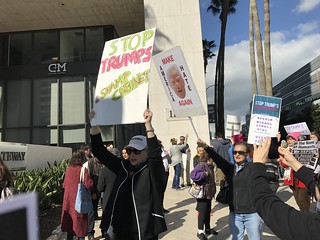
Over 200 people turned out at noon today for a "Stop the #SwampCabinet" rally in front of Senator Feinstein's West LA office. It was encouraging to see such a good turnout in the middle of a weekday. The crowd and its signs were very visible on the busy corner of Sepulveda and Santa Monica Blvd, and many cars honked their horns in support as they passed. News cameras were there and they interviewed a few people. The theme of the rally was opposition to Trump's cabinet nominees, an unprecedented parade of unqualified, extreme, conflict-of-interest ridden, big-money donor, all-white, mostly-male billionaires. This is not draining the swamp, as Trump promised, nor championing the working people. In addition to the prevalent official "Stop Trump's #SwampCabinet" signs, there were a great array of handmade signs for the occasion, as well as a Trump piñata. (Among my favorite signs: "Betsy DeVos is more dangerous for our children than grizzly bears" and "I (heart) facts".) The organizers collected signatures, as well as letters to the senator that many had brought, and were going to bring them to a 1pm meeting with the Senator's staff. While we were at the rally, we got the word that Senator Feinstein had requested a one week delay in the confirmation of Jeff Sessions as Attorney General, which was scheduled for today. In her remarks requesting the postponement, she talked about the impression that the Women's March had made on her. Let's keep that feeling up, and give her the courage to vote NO to this #SwampCabinet! (See photos from the rally.)

Sunday, January 22, 2017

ACA: The Dog Caught The Car

Like a dog chasing a car, the GOP has been barking about repeal of the Affordable Care Act (ACA, or "ObamaCare") for years, but now that the dog has caught the car, the Republicans have no idea what to do. They don't know how to repeal the ACA, and moreover, they don't even really know why they want to repeal the ACA. Do they want to go back to allowing insurance companies to deny coverage for pre-existing conditions? Or do they want to go back to allowing insurance companies to have lifetime caps? ("Sorry you need that life-saving medicine, but you've hit a lifetime cap so we're not going to pay for it anymore.") Maybe it's the part about allowing parents to cover their children up to age 26 that they want to eliminate? Or maybe they want to go back to the Medicare "donut hole", so that seniors might be on the hook for thousands of dollars in medication costs? Do they hate that more than 20 million people who previously couldn't obtain insurance now have coverage? Or that states are saving hundreds of millions of dollars in uncompensated care because fewer uninsured people are using emergency rooms as last resorts? Maybe they don't like the primary care coverage, which helps reduce costs in the long run? Or maybe they don't like the mental health and substance abuse treatment coverage, that allows people to get into rehab programs rather than just showing up at the hospital when they overdose. (And note to the smug morally superior folks who might think substance abuse is a problem for "those other people": google "opioid epidemic".) Pretty much every feature of ObamaCare is popular when people are surveyed about it. When it comes down to it, the only thing people truly hate about ObamaCare is the name. Here's a pro tip for members of Congress: Americans don't really hate ObamaCare, what they really hate is disruption in their health care. If over 20 million people lose their insurance because the ACA is repealed, and if millions more lose benefits they currently have from the ACA, those people are going to blame this Congress. You break it, you own it.

Friday, January 20, 2017

Highlights of President Trump's Inaugural Address (Annotated)


  • "The wealth of our middle class has been ripped from their homes and then redistributed across the entire world" (by my Treasury nominee)
  • "Americans want great schools for their children" (but my Sec Education nominee will dismantle them)
  • "Every decision ... will be made to benefit American workers and American families" (as my Sec Labor nominee takes away worker protections)
  • "there is no room for prejudice" (so my Attorney General will make sure that minorities access to vote is unprotected)
  • "We will seek friendship and goodwill with the nations of the world" (well Russia anyway; China, Europe, and others not so much)
  • "Protection will lead to great prosperity and strength" (because tariffs worked out so well in the 1930s)
  • "our government is controlled by the people" (by a minority of people in carefully gerrymandered districts)
  • "And now we are looking only to the future" (but willfully ignoring the environmental cataclism predicted by our scientists)
  • "Every decision on foreign affairs will be made to benefit American workers and families" (but my Sec State will focus on benefit to Exxon)
  • "We stand at the birth of a new millennium, ready to harness the energies, industries and technologies of tomorrow" (like coal, Arctic oil)
  • "there was little to celebrate for struggling families all across our land" (so my 1st act: raise mortgage costs for struggling families)

Wednesday, January 18, 2017

Action Report: Congressman Schiff Forum on ACA

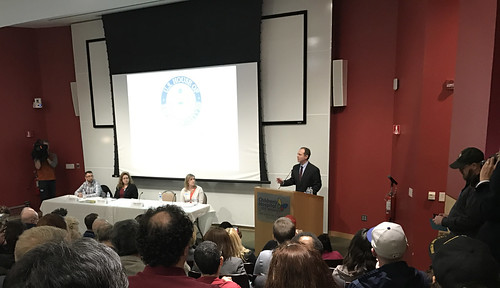
Congressman Adam Schiff (CA-28) held a forum on the Affordable Care Act at Children's Hospital Los Angeles. The auditorium held a couple hundred people, but it was packed and they had to use an overflow room. Schiff headed a panel that also included leaders from Healthcare Access California, Planned Parenthood, and the LGBT Center. Several people shared their stories of how the ACA has benefitted them. Many moving stories about the barbaric pre-ACA days of pre-existing conditions and lifetime limits. One person talked about losing their job and their coverage at age 60, just a few years shy of Medicare eligibility, and trying to find coverage on the independent market before ACA. "When you're 60 years old, you are a pre-existing condition." The forum included time for audience questions. One of the interesting questions asked was what can people in "blue" states do? Schiff said that we should reach out to our friends and family in other states, and we should support organizations with national reach. He reminded that not only do we need citizens to lobby GOP members of Congress, but it is important to strengthen and encourage Democratic senators from states that aren't quite as deep blue as ours. Someone else asked if Schiff would give up his own health insurance if the ACA was repealed. He answered that he would lose his coverage like everyone else on an ACA plan, because he buys his insurance through the Covered California ACA exchange. Another person asked if they should be worried about Medicare. Schiff replied that the ACA had taken several steps to strengthen Medicare, both in terms of benefits (e.g., closing the prescription coverage "donut hole") and in making the program more fiscally sound by effectively slowing the growth of costs. He also noted that repeal of the ACA would add significant costs to the federal budget, and normally the Republicans have always insisted on having the CBO score the "budgetary impact" of every piece of legislation, but they passed a rule to exempt ACA repeal from CBO fiscal impact analysis. They want to sweep the costs of repeal under the rug. (See photos from the forum.)

Sunday, January 15, 2017

Action Report: Our First Stand Rally

It was energizing this afternoon to join a large crowd who rallied at the LA County / USC Medical Center for #OurFirstStand to save our healthcare. The rally was well-organized and had a number of good speakers on the theme. Dan Castillo, CEO of the LAC+USC Medical Center, observed that thanks to ACA, the number of uninsured patients coming into their system has dropped from 16% to 2-4%. Mitch Katz, director of LA County Healthcare said that 1.2 million LA County residents had gained coverage under the ACA, while SEIU Local 721 leader Bob Schoonover noted that 63,000 jobs had been created. (It was good to see the "boss" and the union leader speaking side by side on this issue.) Dr. Ronald Brown, the chief resident of psychiatry, spoke about how helpful the ACA's provisions for mental health and substance abuse care have been in helping people with those issues get effective solutions, who in the past would be repeat clients at the emergency room for their symptoms but never getting their root cause problems solved. A couple of individuals spoke about how the ACA has been a lifesaver for them. One was a self-employed insurance broker who had a major medical issue, the other was a daycare provider with a chronic thyroid "pre-existing condition". These woman ran small businesses, the sort where most of our economic growth comes from, and the sort that helping should be a bipartisan issue. They spoke about how the ACA helped keep them on their feet, able to work and to keep their families together, against forces that before the ACA would have been crushing. (See photos from rally.)

Monday, June 27, 2016

Remembering Tante

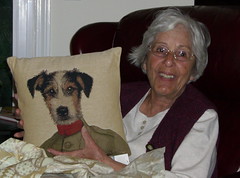
A few memories of Tante Elayne. We called her Tante, which means aunt in French and German and Yiddish.


Tante was a proud New Yorker. Her heart never left New York, and neither did her voice. Both Tante and Unc lived her over 50 years and never lost their New York accents. We'd say, Tante, we saw a hawk in our yard this morning. A what? We'd show her the picture and she'd say oh, you mean a hawwk. When you said 'hock' I thought you were talking about a piece of ham.

Tante was a vocal right-winger. When asked about her politics, she'd smile and say You know Attila the Hun? I'm to the right of him. My grandfather was a Republican, she growled proudly, he hated FDR even from when he was governor of New York. Like Archie Bunker, she was blunt and not the least "politically correct", but like Archie, she was a lovable curmudgeon. Sunday night family dinners were always lively, as we knew well how to push each other's buttons. She was often outnumbered, but she always stood her ground.

Tante was not an early adopter of technology. It was ages before she was convinced to get an answering machine (not voicemail, mind you, but the machine with the cassette tape in it), and it was only a couple years ago she finally conceded to allow a microwave oven into her kitchen. There's no room on my counter. When the Fresh & Easy market went in down the street, with exclusively self-service check-out, the manager got to know Tante & Unc very well, because they'd always call him over and say we don't know how to do this machine thing, you have to do it for us. As inquisitive and interested in the news as Tante was, you would think she would love the Internet, but when we suggested it, she got such a pained, horrified look on her face. What on earth would I do with the Internet? She was content enough for us to bring our iPhones to Sunday dinner so we could show her pictures from Facebook of what her grandchildren were up to. And she'd ask us to look things up for her. Mostly about her favorite radio personalities. It's no small irony that we were hampered in sharing the Internet with Tante by the fact that this house is a total dead zone for AT&T, as if there's an anti-technology force field protecting the house.

Tante claimed to be anti-social. She didn't use that word, she had better SAT words. She taught me the word dour when I showed her a photo of some 19th century ancestors who looked particularly stern and forbidding. Look at those dour expressions, she said approvingly, my kind of people. If you asked her if she liked meeting people, she would say no, dear, I am a misanthrope. In truth, though, she would talk to anybody, and she loved getting people's stories. When we'd go out to eat, as soon as she finished, she'd excuse herself to go smoke a cigarette out behind the restaurant, and she'd often come back having met someone, and she'd have gotten their whole life story. She would meet friends of mine even just once or twice, and she'd interrogate them, learning things I didn't always know. She wasn't just being polite, she was interested, and she would remember. Not names, so much, but she'd remember stories. Even years after she'd met someone once, she'd ask about them -- whatever happened to your friend the architect, or that one with the young daughter with cataracts, how is she? Some misanthrope.


Tante loved eating. She ate with gusto. And she was a gracious guest. She would always compliment the meal, earnestly and enthusiastically. Even at our very casual Sunday family dinners, she would exclaim with delight about knockwurst and cabbage, as if she were trying the dish for the first time. Of course, my Mom's knockwurst and cabbage is really good. We all love it, but Tante was always the first one to say so. She had a gift for expressing appreciation. “Oh George, you're clearing dishes again, you don't have to do that, you're such a help.” “Oh Thomas, you brought me blueberries, I love blueberries, and so good for you!” A couple years ago, when they needed some extra help, their granddaughter Rachel chose to take her spring break out here helping them. Rachel, you must have heard that appreciation. We sure heard it afterwards. “Oh that Rachel, she's such a help! And such a good cook!” Part of that might have just been a good upbringing by Elayne's mother, who never left the house without her hat and gloves. But Tante always expressed her appreciation so heartily, as if you were the first person to ever clear a dish or bring her an apple. It was a gift, and a good lesson.

Sunday night dinners will never be the same without Tante oleha sholom, v zichronah livrakha (peace be upon her, and may her memory be for a blessing).

Tante Elayne -- Life Sketch

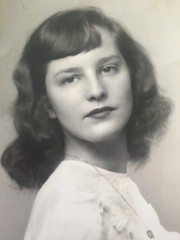
Elayne was born on Feb 18, 1931, in the Bronx, New York City, the daughter of Paul and Rhea Taylor. Her mother's side of the family, the Brantmans, were Jewish. Her grandparents, Louis and Betty Brantman, were eastern European immigrants who met in New York City, and re-enacted Fiddler on the Roof with their family of five daughters, each daughter pushing the boundaries of their father's traditional views a bit further. Paul Taylor, from a line of Taylors going back nearly to the Mayflower, and ancestry entirely English and Scottish, was obviously not Jewish, and not Louis' idea of a perfect match for his daughter, but when Paul agreed to study for two years to convert to Judaism, Louis consented to the match. When Elayne was born, her grandfather registered her birth in temple, where she was given the Jewish name Sarah.

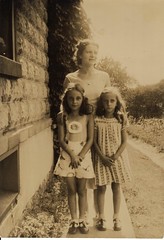
Elayne with her mother and sister
Elayne was Paul and Rhea's first daughter. A year and a half later came Cecile, and for their whole lives, those two would be as close as any two sisters ever were. Their early childhood was the midst of the Great Depression, and their family was as hard hit as any. Paul was an accountant working in Manhattan, and in the late 1920s, when the stock market looked like it could only go up, he had put most of his and his family's money into it. When the girls were very young, Rhea's parents both passed away, and Paul moved his family to New Jersey, where they could be closer to Paul's parents, and his brothers Frank and Don. For a time, the whole extended Taylor family was sharing one house, but later in the 1930s, Paul found steady work at a casting company, and the family had their own home in Great Notch. The girls had a good time there, and used to play on the train cars parked at the station near their house.

By 1941, Elayne's father, who had gone to a military school, was eager to take his part in World War II. The US hadn't joined the war yet, so Paul went up to Canada and enlisted with the Royal Canadian Artillery, where he soon shipped out and spent the rest of the war in the European theater. Rhea, left alone with two young daughters, moved to an apartment in Kew Gardens in Queens, where she could be closer to her sisters Nina and Fanny, and their families. For a time, Aunt Fanny and Uncle Sam lived upstairs in the same building. Nina had two daughters, Carol and Betty, just a bit younger than Elayne and Cecile. After the war, Paul chose to stay in Canada rather than return to his family. Rhea, Elayne, and Cecile lived in that same apartment in Queens throughout the 1940s and most of the 1950s. Elayne and Cecile had happy teenage years there, spending time with family, attending Forest Hills High School, going to social events at the Jewish Community Center, and sometimes going in to the city with their mother, who reportedly never left the house without hat and gloves. When Elayne was about 20 years old, it was at one of those events at the Jewish community center that she met Harold Hess, the handsome elder son of a shopkeeper in Forest Hills. No one remembers exactly how long they courted. Unc Harold says "We met at the party, she invited me home to meet her mother, she was nice, and that was it." The one thing that Harold and Cecile both remember is that when Elayne brought Harold home to meet the family, he offered to fix a broken window shade, but ended up pulling the whole thing down on his head.


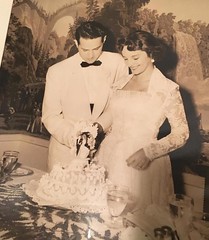
Elayne and Harold were married in August 1952, with a reception at the Forest Hills Inn, attended by family including all four of their parents. They moved into a small house on Harmony Drive in Massapequa on Long Island, nearby to her cousin Dottie Stetter and her young family. They enjoyed life in Massapequa, and made a lasting friendship with a neighboring family, the Amendolas. By the end of the 1950s, they had two children, Donna and Victor.

Meanwhile, Elayne's sister Cecile had moved out west, where she met her husband Rod Chatt, and settled in Granada Hills, where the suburbs of LA were just starting to push into the orange groves of the San Fernando Valley. Much as Elayne loved New York, she didn't want to be apart from her sister, and so in 1964, the Hesses moved to Granada Hills. They lived briefly in an apartment on Devonshire, and then moved into this house that is still their home after 50 years. Donna and Victor went to the elementary school right across the street, then Frost Jr High, and Kennedy High, which was built just in time for Donna to attend. The Hesses found more lifelong friends in this neighborhood, including the Hagawaras and the Hillbergs. (Like the Hesses, the Hillbergs are settled people, still here after 50 years.)


While Harold established his window-washing business, Elayne became quietly involved in the community, attending neighborhood watch meetings, and volunteering to be precinct captain of the local election board. But she mostly devoted herself to three great passions. One, she cleaned her house. Constantly. Her house was always immaculate. Two, she listened to conservative talk radio. She never quite warmed to the TV. The TV was fine for Masterpiece Theatre, for Jeopardy, and for Dancing with the Stars. But when it came to politics, for her, all the best people worth listening to were on the radio.

Elayne's third and greatest passion, of course, was rescuing animals. For the first 15 years they lived here, there was just a big open field from here to Balboa, at the end of the valley, a place where thoughtless people would dump unwanted pets. Her first rescue was Penny, an orange tabby who showed her love by bringing her mother trophies she'd catch in the field: birds, rats, gophers, all were no match for Penny. Elayne was particularly fond of Staffordshire bull terriers, more commonly known as the much-maligned "pit bull", and she took in several pit bulls over the years that had been mistreated by prior owners. When her house was filled with pets, she then filled her sister's house too. Many of the Chatts' pets were Elayne's rescues. And if you've seen their menageries, you know that clearly Donna and Victor have both inherited their mother's big heart for animals.

Elayne liked her life guided by routine. 9pm phone calls every night with her sister. Going out every Saturday night with the Chatts. Family dinner every Sunday at the Chatt or the Hess home. Getting together the whole family on Thanksgiving and Christmas. Visits every summer by Donna and her kids. I think she would like to be remembered simply, as faithful to her family, as a good neighbor and citizen, and as a lover of animals. And for 85 good years, that's exactly what she was.

Monday, May 30, 2016

Remembering Kathryn

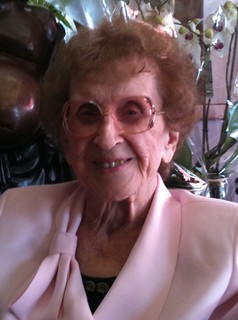
On Saturday, a large crowd gathered at our church to remember our dear friend Dr. Kathryn Nelson Magarian. We were heartened (but not surprised) to see how many came, many from far away, to celebrate the life of a much beloved soul. Kathryn was one of those rare people who literally radiated joy and positivity. She beamed, often, with a room-lighting smile and a voice near song that made you feel like the most special person in the world, and she had the gift of making everyone feel special. When she met you, she would say that she was so glad to meet you, or so glad to see you, and she said it in a way that was so genuine and so not an automatic pleasantry that the words would strike you fresh, like you'd never heard them that way before, and you'd think "wow, she really is glad to see me!" At the end of church services, a crowd would always gather around her regular pew in the front-left, and her caregiver would have to wait patiently, as everyone wanted to spend a little time with Kathryn.

George and I first got to know her in 2008, when some mutual friends asked if we could give her a ride to their wedding in Redlands. Kathryn suffered from a degeneration of the cerebellum that gave her tremors and had made her unable to drive herself any longer. We were happy to oblige, and of course a long car ride can be a great way to get to know someone. She had lived a very full life and was full of great stories. She was recently retired from a 37-year career as a pediatrician at the White Memorial Hospital, having started as a legal secretary and then putting herself through med school in her thirties. She had traveled the world and been on great adventures, including hunting wild game in Africa (for the sake of spending quality time with her father, though she had the game trophies in her home to prove it). But as much as she had done and seen, she was also a great listener and eager to know all about us. At the end of that day, we knew we had made a great new friend.

There's an adage that one way to judge someone on a date is to see how they treat the waiter. Kathryn's contagious joy in people extended to everyone, and that was very clear if you ever took her to a restaurant that she had frequented before. All the staff would light up to see her, because they would all remember her, and she remembered them, often by name, knew their stories, asked about their families. Everyone was special to her, and made to feel special. In recent years, when she was spending more time in the hospital, it was the same story there. It was clear that all the nurses and staff had a special affection for Dr. Kathryn. At her memorial, Dr. Beth Zachary, the CEO of Adventist Health Southern California Region, spoke about how it was difficult just to move Kathryn around in the hospital, because they couldn't get very far down any hallway before they'd run into someone she had cared for as a doctor, and they'd light up to see her, and she'd light up to see them, remembering their names, their stories, their families, like they were the most special person in the world. As this remembrance was shared, hundreds of us smiled and nodded knowingly, having seen it ourselves.

Her radiant joy was a miracle in itself, but it was all the more amazing when I think about the great hardships she faced in her life. I'd mentioned the debilitating cerebellar degeneration. Recurrent cancers were piled on top of that. And she endured other brutal non-medical hardships I won't detail. She had more cause than most anyone to complain or to question her faith, and yet she did not do either. She remained unceasingly faithful in God, and unfailingly joyful in life. This loving woman, who probably would have loved to have had children of her own, was not given that. Yet when asked if she had children, she would reply with no sorrow and a genuine bright smile, "I was a pediatrician for 37 years, I have hundreds of children." And she adopted more as she went. We felt like she adopted us. That was just her nature to see the positive in everything, to find some cause for joy in each day, and to share it. Our world is a bit dimmer now without her light in it. She was an inspiration, and I hope I can honor her memory by striving to find joy in everything and share it with those around me.

Sunday, April 10, 2016

Three Black Lives

Accepting the premise that Black Lives Matter, I figured I should be reading more about contemporary black lives, and so I picked up three very different memoirs, each essential reading in its own way. I started with How To Be Black, by Baratunde Thurston. Much of the book skewers the uneasiness of race consciousness in contemporary America, with satirical advice on topics like "how to speak for all black people" and "how to be black at the office". The satire is funny and sharp (as one would expect given Thurston's long career at The Onion), puncturing perceptions, making you think and laugh at the same time. Interspersed with the advice chapters, we get the fascinating story of Thurston's own life, growing up with a single mother in Washington DC during the height of crack, then being one of the few black kids at an elite private school and later attending Yale. And the third component of his book is a series of interview questions with what he calls his "black panel", a set of "experts" on being black (which included one white guy for a scientific control), who added another dimension with the fascinating diversity of their experiences. The questions were all great, but the most interesting one for me was "When did you first realize you were black?" This particularly struck me, since as a gay man, I had always assumed gays were unique among minorities in having to realize later in life that we are gay. But the question, while humorous, elicited some serious responses. Even though black kids always know they're black, many of them did remember particular experiences when they first realized that being black was more than just a skin tone, that it was a social category. The whole book was entertaining and gently illuminating. 

From this light start, I then turned up the gravitas with Ta-Nehisi Coates' Between The World And Me, a memoir written in the form of a letter from a father to his teenage son, telling his son the things he needs to know about where his father came from and what it means to him being black in America today. Coates grew up in a really rough part of Baltimore, and describes at a young age learning the rules of the street just to avoid being stabbed or shot. He later went to Howard University, which he calls "the Mecca", and was enthralled with that center of black culture. He describes people he knew and who influenced him, and things he has experienced that instilled in him an understanding of the particularly breakable vulnerable nature of "black bodies" -- everything from minor but telling affronts to personally knowing a man who was shot by police basically for being black in the wrong neighborhood. Everything is grounded in his very personal experience, avoiding polemics or politics, and that makes it profoundly powerful. It's all what he saw, what he lived, and what he felt. Polemics invite debate, but experience has a raw truth with no place for debate. His intense missive is elevated by the words with which his experiences are described. His prose is masterful, emotionally vivid and evocatively poetic. It is truly a brilliant work of writing, and a must-read for anyone wanting to understand this experience. In Coates' book, he spoke of his complete alienation from the white suburban lives he saw on TV as a child, and of those suburbs being built on piles of "broken black bodies" by the "people who need to think of themselves as white". While I understood his feelings, he didn't really explain what he thought caused that situation, and I didn't understand it until Cory Booker spelled it out for me.

The third book I read was United: Thoughts on Finding Common Ground and Advancing the Common Good by Cory Booker, former mayor of Newark and now US Senator from New Jersey. His memoir is an inspirational story: we get some brief glimpses of his childhood growing up in one of the first black families to integrate themselves into the very white Harrington Park, New Jersey, and then attending Stanford, Oxford, and Yale Law School. The meat of the story starts with him as an idealistic newly-minted lawyer wanting to help improve the city of Newark, and getting a real hands-on education by choosing to live in one of the most crime-ridden parts of the inner city. He tells the story of Brick Towers, a 16-story housing complex built in 1970, initially a promising place to live, but ultimately dragged down by landlord neglect to suffer rat infestations and broken elevators, and its location in a neighborhood of the city effectively semi-abandoned by the City of Newark to become a center of drug dealing. In the years he lived there, he got to know just about everyone, and he tells the story of the indomitable woman who lead the tenants association, of parents and kids who live there, and even of the drug dealers who worked there. He gains and shares fascinating insight into who these people are and how they got to be where they are. This is all intermixed with his own story of how he went from being a public interest lawyer to city councilman and eventually mayor and senator. Some skeptics will say that his actions and his book are all politically self-serving, but I think he came across as genuinely concerned to improve his city and his country. Living in blighted housing for a few days or weeks is a publicity stunt; Cory Booker lived in Brick Towers for 10 years until it was torn down, and then he sought another crime-ridden area of his city to move to. I don't see how one can say that's not the real deal. I found his book inspirational, in terms of gaining a new understanding of deep social problems that suggest practical solutions, and in terms of the faith that drives him, a combination of religious faith and a faith in his fellow citizens to work together to find solutions. I think Cory Booker is a new hero for me.

Sunday, March 20, 2016

Most Influential Books

Thinking about books that have changed me, there are a few that go back to high school:
  • Strunk & White's "The Elements of Style", for impressing on me that writing is a craft and a skill
  • George Orwell's "1984", for impressing on me the power of words, and the importance of naming things correctly, and also that government can be corrupt
  • Shakespeare's "Hamlet", for giving me an appreciation of the soaring heights of the best of the English language, as well as planting the seed that would flower decades later in a life quest to see all of Shakespeare's works, which was itself a pillar in one of the most important friendships in my life
  • Plato's "Apology", for impressing on me the value of goodness and truth
  • a book that I think was by Evelle J. Younger (Calif Attorney General in the 1970s) called something like "A Student's Guide to Legal Rights", which outlined the rights that students had (e.g., to refrain from pledging allegiance) and the constitutional principles and cases that established them, which gave me a lifelong love and fascination for constitutional law. (I can't remember the exact title or be sure of the author. I only know that I found it in the Petit Park branch of the LA Public Library in the 1970s.)

Books that affected my life from college days:
  • Bertrand Russell's "Why I Am Not a Christian". Long before Hitchens or Dawkins had even been born, there was Russell. Not that I was ever a believer, but he was an early hero of the despised minority of atheists, clear in his arguments and forthright in his convictions.
  • Jeffrey Stout's "The Flight From Authority", the text for a freshman year class that looked at the intellectual crisis that occurred post Reformation when knowing what was true was no longer a matter of asking the right authorities. It gave me a lifelong appreciation for a particular strand of philosophy that happened to find its home at Princeton in the Religion Department, introduced me to some professors who were profoundly influential to me, and acquainted me with a vital conversation in contemporary philosophy including Rorty, Alasdair MacIntyre, Stanley Hauerwas, and others.
  • Richard Rorty's "Philosophy and the Mirror of Nature", a tour-de-force critique of post-Enlightenment philosophy
  • the Fannie Farmer cookbook, for giving me the essentials to gain confidence in my own basic cooking skills, providing a foundation for a lifelong love of cooking.
There are also a bunch of books from my coming out days, in which I was avidly devouring gay fiction, hungry to find constructive images of what being a gay man could be like, or at least to learn what it was to be a gay man in the world then. There were many classics here -- Andrew Holleran's "Dancer From the Dance", Edmund White's "Best Little Boy in the World", David Leavitt's "Lost Language of Cranes" -- to name a few. But I think the ones that stuck with me the most were Mary Renault's "The Charioteer" and Armistead Maupin's "Tales of the City" series.

In the decades since college, I think a few books have had substantial impact on my life and/or influence on my thinking:
  • Andrew Sullivan's "Love Undetectable", for crystalizing the virtues of love and friendship and the value of being gay
  • Ernest Hemingway's "For Whom The Bell Tolls", which taught me that a life well lived is not measured by its time span, and that love, even if fleeting, is worth having
  • Nina Planck's "Real Food", which, along with Michael Pollan's seminal "Simple Rules" New York Times essay, really set me on the path of more locally grown, farmers market-driven, home-cooked eating.
  • Jeffrey Stout's "Democracy and Tradition", which I read in 2008 during the Calif Prop 8 (anti-gay marriage) battle, and which took the philosophical dialogues I'd been following for years and gave them very practical application in how to address my fellow citizens about a vital and controversial issue
  • Arnold Kling's "Learning Economics", which taught me not only the basics of economics, but the economic way of thinking (so that I was already predisposed to love Freakonomics when that came out)
  • Andrew Sullivan's "The Conservative Soul", for showing me that "conservative" doesn't have to be synonymous with "selfish and judgmental" (and in a way, this book entry really is a proxy for Andrew's blog, which I read religiously for years and was enormously influential on me)
  • Daniel Gilbert's "Stumbling on Happiness", for illuminating me about how fallible our cognitive processes are, and that one should plan with humility
  • David McCullough's "1776", for giving me a proper sense of awe for how, had slightly different decisions been made at certain points, certain advice ignored or followed, certain unknown things discovered, or even the wind blown differently on a certain day, our fate could have been entirely different, and that the course of history is fragile. (His "John Adams" also gives me comfort, when I am despairing that our political polarization is worse than ever, that no, actually, it's not.)
  • Malcolm Gladwell's "Outliers", for giving a vivid argument of how much we owe to our circumstances and our forebears
  • Jared Diamond's "Guns, Germs, and Steel", for giving a visionary argument for how much we, on a biological and evolutionary scale, owe to our circumstances

Friday, March 04, 2016

Reflections on Antonin Scalia

I can say this about Scalia: the man knew how to wield a pen. His dissents were always colorful and entertaining, a guilty pleasure to read. How can one not appreciate someone who can drop words like "argle-bargle" and "jiggery-pokery" when brandishing his prose? It's unfortunate that this skill wasn't put in the service of better ends. In the annals of the Court, Scalia will be remembered for bringing the notions of "textualism" and "originalism" into currency. These are the ideas that correct judicial interpretation of the Constitution can be readily found by reading the plain words (textualism) and understanding the Founders' original meaning (originalism). They are meant to counter the notion that the Constitution is a "living document" that must be interpreted by the Court according to its essential principles in light of current understanding. Students of religion will recognize these theories as they apply to Biblical hermeneutics, and students of history will recognize how well the idea that one can gain universal agreement on the clear interpretation of the "plain words" (sola scriptura) works out. Taken at face value, Scalia's principles would have to rule that the Air Force is unconstitutional, as the plain text of the Constitution enumerates only an Army and a Navy, and the idea of military air power would not have been conceived of by the Founders. Though challenged on it, Scalia never did really explain how an originalist could endorse a decision like Brown v. Board of Education (the 1954 decision that ended school segregation), since the ratifiers of the 14th Amendment certainly didn't foresee or intend that implication themselves. His dodge is that he would have correctly decided Plessy v. Ferguson in the first place (that's the notorious 1896 case that ruled "separate but equal" schools constitutional). That's cheap hindsight. It's far more likely that an 1896 Scalia would have been as benighted by the prejudices of the day, finding segregated schools a reasonable social norm, as the present-day Scalia who heartily endorsed Bowers v. Hardwick (the infamous 1986 case upholding the constitutionality of sodomy laws). As called out in a New York Times opinion piece by Circuit Court Judge Richard Posner and law professor Eric Segall, Scalia is really a theocratic majoritarian at heart, content to find no power in the Constitution to protect minorities against the tyranny of the majority, at least when it comports with his own conservative morality. When his principles would seem to lead to a conclusion that went counter to his personal morality, his intellect and prose would be brought to bear to torture his principles into confessing the desired conclusion. See, for example, his opinion for the Court in Raich v. Gonzales, finding that Congress's Commerce power could regulate people growing pot in their own backyard for their own personal use, and Justice Thomas's dissent in a rare split from Scalia. Likewise, one might well wonder how a textualist or an originalist finds "corporate personhood" (the idea that corporations are persons, and thus have the same rights as persons) in the plain text or original meaning of the Constitution. While he refused to see the straight lines from the Founders' principles through de Toqueville and John Stuart Mill to landmark decisions like Griswold (finding a fundamental right to marital privacy that made it unconstitutional to outlaw contraception) and Lawrence (overturning Bowers and sodomy laws), he could see "penumbras" when he wanted to. Ultimately, he was as guilty of "interpretive jiggery-pokery" as anyone. His originalism may have provided better cover for his anti-gay animus, except that his apoplectic dissents on every landmark advance in gay rights over the last thirty years unabashedly laid bare his conservative moral prejudices. Despite the clear constitutional jurisprudence that "bare animus" is insufficient rationale for a discriminatory law (i.e., a majority may not outlaw a minority without a reason better than "ew that's weird"), Scalia, in his dissent in Romer v. Evans, rises to the defense of bare animus when it amounts to moral disapproval of homosexual conduct. Beyond his legacy of originalism, he also leaves a legacy of coarsening the level of discourse around contentious issues, unfortunately now embodied in the records of our highest court, and emulated by many of his Federalist Society acolytes. The admittedly entertaining creativity of his prose often belied bare pugnaciousness, light on real argument. He was famous for his tart interrogations during oral arguments, and the zingers in his dissents. Here is a typical example in his stinging dissent in Obergefell (last year's landmark gay marriage ruling):

If, even as the price to be paid for a fifth vote, I ever joined an opinion for the Court that began: “The Constitution promises liberty to all within its reach, a liberty that includes certain specific rights that allow persons, within a lawful realm, to define and express their identity,” I would hide my head in a bag. The Supreme Court of the United States has descended from the disciplined legal reasoning of John Marshall and Joseph Story to the mystical aphorisms of the fortune cookie.
This is just plain mockery of Justice Kennedy's opinion, with no particular "disciplined legal reasoning" of its own to offer. (One might claim that there is legal reasoning elsewhere in the dissent, but really, no, it's just one long rant about "judicial putsch" that could have been equally aimed at Lawrence or Griswold or Loving or even Brown.) If ever there were a time to hide one's head in a bag, I would think it would be after writing something so derisive and insulting about a colleague I'd be facing the next day (and working closely with for the rest of my life). Often it is only the cleverness of the prose that distinguishes Scalia's writing from the incivil name calling and insults found on the typical Internet comments page (or more recently, the Republican debates). One might consider him the Supreme Court's original troll. A few years ago, when he was speaking at Princeton, a gay student pointed out the language in some of Scalia's dissents that was especially offensive (such as comparing homosexuality to bestiality or pedophilia) and asked him, even if he still stood by his argument, if he had any regrets for his offensive choice of words. No, he did not. It is ironic that he worried he was witnessing the deterioration of our culture with the advance of gay rights (despite his best efforts to fight it at every opportunity), and yet by his own example he lead the coarsening of constitutional legal discourse and contributed to the erosion of respect for the institution he served. That being said, I will miss reading his dissents. There is the guilty pleasure of the zingers, of course. But the best part of reading a Scalia dissent is knowing that it was a dissent, and that despite his grandiloquent tantrums, liberty and justice prevailed.

Sunday, February 28, 2016

Remembering Gladys

This weekend, we celebrated the life of our friend Gladys, who passed away last week just two months shy of her 106th birthday. (Yes, that was not a typo. When Gladys was born in 1910, William Howard Taft was President, Edward VII was on the throne, and the fictional events of Downton Abbey's first season wouldn't happen for a couple of years yet.) I first met Gladys when George and I were dating, and he started bringing me to his church in Glendale, where Gladys and her husband Gene were stalwart congregants. Not only did they attend Glendale City Seventh-day Adventist every Saturday, as Gladys had grown up Adventist, but they also attended the Methodist church every Sunday, where Gene, now retired, had been a pastor. George had been going to Glendale City Church because it had quietly established a reputation as a safe and accepting place for gay Adventists, and had a growing gay attendance. There were a few rows in the rear center section that had become the "pink pews". Gladys noticed the growing group of members in those rows, and decided that she and Gene should be welcoming, and that they were going to sit with us. So this octagenarian double-church-going couple made it their mission to sit with "all those nice young men". They had a midwestern friendliness about them, and Gladys became like an adopted grandmother to all of us, greeting everyone with hugs and always checking in on us, and asking after anyone who had missed a week or two. She had a sweet, grandmotherly way of cupping your face in her hand. Then after this had gone on some time, an awkward conversation happened. Gladys said to one of the guys, "you know, some people in this church have been spreading malicious gossip that you boys are all homosexuals, but I told them it's not true, and they shouldn't talk about 'my boys' like that." To which came the reply, "Um, Gladys, actually it is true." This threw her in a quandary. She was torn between what she had been taught about homosexuality and sin, and "her boys" whom she had come to love. She had a long talk with our pastor, telling him "I'd always been taught that it's wrong, but they're wonderful young men and I just can't reject them." She decided that "loving the gays" was her calling, which she undertook with zeal for the rest of her long life. She adopted us and we adopted her, and love made us all family.

Sunday, January 03, 2016

Six Feet Under

My latest "TV" binge watch (on my iPad) has been Six Feet Under, to catch up on the last two seasons that I never saw. Fittingly, on New Year's weekend, I watched the series finale. I had heard that it was extraordinarily well done, and that is so true. It was an amazing ride with the barely functional Fisher family, and I have to admit that there were times that I wondered whether I really liked any of these characters, even to the penultimate episode. But then in the final episode, life found a way to go on after a death that had affected them all, and it was so organic and so affirming. And then the final montage was simply wondrous. Structurally it combined two cinematic cliche endings — a ride off into the horizon and a roll call of every character and what happened to them — and yet it did it in such a fresh, profound way that it was extraordinary and luminous. The whole premise and structure of the series has been one long memento mori, a family-run funeral home with each episode beginning with a death, with characters often imagining conversations with the dead, constant reminders that life can be fleeting and death can be senseless. So it was brilliantly fitting that in the final montage we see the deaths of all the major characters, some sooner, some later. This span of lives over decades is telegraphed in flashing glimpses, interspersed with shots of Claire driving out of Los Angeles, away from the only home she's known, into a frightening, exciting, beckoning unknown future unfolding like the highway before her disappearing into the horizon, and all to the beautifully haunting song "Breathe Me" (Sia Furler). She's just learned her job offer in New York has been rescinded, but her dead brother urges her to go anyway, not to live in fear. And as she takes a farewell photograph of her family, Nate whispers in her ear "the moment is already gone, you can't capture it." Moments and lifetimes. What an exquisite piece of television, and what a perfect note on which to begin a new year.

Tuesday, September 15, 2015

Caesura Youth Orchestra

Part of the Jewish tradition in the days between Rosh HaShanah and Yom Kippur is to focus on "tzedakah" (charity). In that spirit, as I'm writing checks, I'd also like to give a shout-out to some special organizations over the next few days. Here's the first: We are proud to support the Caesura Youth Orchestra since its founding just over a year ago. You may have heard how LA's superstar conductor Gustavo Dudamel came from a program in Venezuela that brought music education to children in impoverished circumstances. Caesura was created to bring the same model to our local community in Glendale. Music education in the context of an orchestra not only teaches children music, but it gives them the self-confidence that comes from mastery through practice and putting in the time and work, and the value of community and cooperation that comes from being a part of something larger. This kind of program is invaluable especially in the parts of our local community that have less financial and social capital than others. The Orchestra has had a good first year, just finished a Summer Music Camp, and they are starting their second school year. When you're thinking about charitable donations, we hope you'll join us in supporting the Caesura Youth Orchestra.

Wednesday, August 26, 2015

BOOKS: Reading Lolita in Tehran

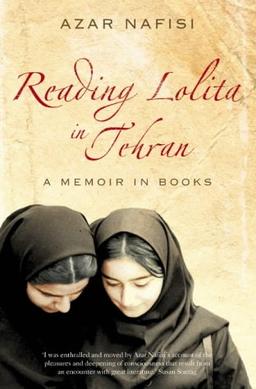
 Reading Lolita in Tehran book cover
When I think back on my school years, it is usually the English teachers who stand out as the most profoundly influential. I think this maxim would be accepted by the students of Azar Nafisi, author of the fascinating memoir Reading Lolita in Tehran. I was transported by her account of her years as a professor of literature at various universities in Tehran in the wake of the Shah's fall and the rise of the Islamic Republic of Iran. The book is a witness to the horror of how a rather liberal and educated society can so quickly transform into a totalitarian theocracy, and of the sometimes surreal life under such rule. I'd had a fairly shallow and monochromatic understanding of modern Iran, so this book was very illuminating for me in filling in rich detail how the Islamic republic first arose amidst a complex mix of Islamists and a more Marxist-inspired revolutionary movement, and later how things changed (or didn't change) through the war with Iraq, and the death of Ayatollah Khomeini. But what makes the book work so well is that it is not focused on politics per se, but on literature and the lives of a group of especially motivated students who continue to meet with Dr. Nafisi, even after she is pushed out of the university, in order to study the works of great novelists. Early on, when her students were pressing her for her approval of their urgent revolutionary ideals, she insists that she is neither for the Islamists or the Marxists, rather she is for Jane Austen and Henry James. At one point in her class, they even put The Great Gatsby on trial. The interplay between the themes and characters of classic novels with the lives and struggles of the women in Nafisi's private study group is fascinating, with each providing a mirror that shows the other in a new light. Her students share a common desire to study literature, but little else. Some are married, some are not; some are religious, some are not; and so on. Their varied experiences provide threads of many colors for Nafisi to weave into an exquisite Persian carpet of a memoir.

Sunday, August 16, 2015

STAGE: Bent


We saw some breathtaking theatre last Saturday at the Mark Taper, in their production of Bent by Martin Sherman. The play is a powerful, horrifying chronicle of gay life in Germany during the rise of the Nazis. It begins in the liberal, decadent Berlin of the 1930's (picture Cabaret), but where Cabaret merely gestures at the horror to come, Bent actually takes us there, as the play's protagonist, Max, goes on the run, is captured, and ultimately transported to Dachau. Max does what he needs to do to stay alive in the grip of captors with a vicious talent for treatment calculated to lacerate one's soul and strip one's humanity. There was a moment when Max was broken like Winston at the end of Orwell's 1984, yet this story goes beyond that moment as Max, through Horst, a man he meets on the transport, learns to rediscover and reclaim his humanity and dignity even in the face of evil. The arc of this story is heart-stopping, and the enactment of it that we saw on Saturday night was gripping. The performances were all electric and spot-on, particularly Patrick Heusinger and Charlie Hofheimer as Max and Horst, and Will Taylor as Rudy, and all the rest of the cast. The direction by Moisés Kaufman was fantastic, so creatively realizing this story, and pulling out all the stops of the theatre craft. The stage, lighting, and especially the sound were used to marvelous effect (such as creating a train just from sound and light).

This play originally premiered in 1979, illuminating the previously little-known persecution of gays under the Nazis, and establishing the pink triangle as a reclaimed symbol of gay pride. Thirty-five years later, it remains as relevant as ever. One of the most frightening things was just realizing how quickly a liberal society can be taken over by jackboots. Germany in the early 1930s was not so different from America in the 1970s or even now for that matter, and yet how quickly complacent liberals fell under the boot. (I'm currently reading a book that tells a similar story of Tehran circa 1980.) I know that several memorable scenes from this play will haunt me: the SS bursting into Max and Rudy's apartment, when Max is forced to betray his own love, the amazing scenes of Max and Horst making love without moving or touching each other, and the electrifying end.

Tuesday, June 16, 2015

BOOKS: Washington's Spies: The Story of America's First Spy Ring

During the American Revolution, not only were the politics revolutionary, and the military tactics, but the espionage as well. In his book Washington's Spies: The Story of America's First Spy Ring, Alexander Rose tells a fascinating story of how George Washington used spies during the war. Using words like "handler" and "tradecraft", well-known to modern audiences familiar with Tom Clancy novels, he finds the roots of these concepts in the tradecraft of 1777, when best practices were first being worked out. We get a thorough account, not only of more well-known heroes and villains such as Nathan Hale, Benedict Arnold, and Major André, but of a network of spies that ran through most of the war and remained unknown until generations later. Rose brings a historian's meticulousness to his work, carefully identifying each person and not going too far beyond his sources. At the same time, he does a good job giving a rich and full picture of the men in this history, their character and their likely motivations, based on their family history and place in the political, religious, economic, and social tides of their times. It was very interesting to see how the constant struggle to balance security against efficiency played out in the quest for timely accurate information. The spies were constantly worried about exposing themselves to undue scrutiny, while Washington fretted how to get their information faster. The book also provided an eye-opening window on life in New York and Connecticut during the Revolution, places that were deeply divided in their loyalties. It's easy to forget that not all Americans at the time were pulling for the American side. There were many loyalists supporting the British, as well as opportunists playing both sides, and one could never be completely sure where one's neighbors stood. In telling his spy story, Rose also paints a vivid picture of what life was like in such a time and place.

Tuesday, June 09, 2015

BOOKS: Plato at the Googleplex

Rebecca Goldstein feels that philosophy is embattled, both by scientists who dismiss it as a pre-scientific pursuit and people in general who don't see its relevance. In her book Plato at the Googleplex, she makes an engaging and entertaining argument that the questions raised by Plato 2400 years ago are as relevant and important today as ever. The centerpiece of the book are imaginative dramatizations of Plato encountering modern people at the Googleplex, at the 92nd Street Y, being interviewed by a Rush Limbaugh-like talk radio personality, and getting an fMRI brain scan. These dialogues are alternated with lectures providing background on various aspects of Plato, setting him in the context of the politics and recent history of his time, and giving a good account of why he was just so challenging to his contemporaries. She is wanting to address a broad audience, and the book sometimes skirts a fine line of being a bit patronizing by trying to be accessible, but I was ultimately won over and found it worthwhile to stay with it. Her characters who are foils for Plato in her dialogues are sometimes buffoonish caricatures. But then I remembered that that's often how it was in Plato's own dialogues, so she is actually doing a faithful pastiche. Not only did I learn a lot I didn't know about Plato, but I found she did succeed in showing his way of thought to be vital today, pondering questions like whether morality can be crowd-sourced, how to raise children, whether followers are your best friends, and what if anything might be left of free will when neuroscience has scanned the entire brain. If you have any interest in philosophy, don't leave this book unexamined.

Saturday, May 30, 2015

FILM: Far From The Madding Crowd

In Thomas Vinterberg's Far From The Madding Crowd, Carey Mulligan does a great job of playing the fiercely independent yet charming Miss Everdene that any man would fall for, and Matthias Schoenaerts is the picture of quiet strength and steadiness as the aptly named Mr. Oak. Anyone who enjoys Victorian period dramas will find much to enjoy in this adaptation of the Thomas Hardy novel, a tale of love and passion, as well as perseverence. Not having read the book, I found some of the fundamental elements of the story puzzling, why she makes some of the decisions she makes. But perhaps I should just take the heroine at her word that "she finds it hard to explain her feelings in a language created chiefly by men." As with similar Victorian stories of spirited heroines, things work out in the end. The characters are all very well played, and the film is worth seeing for the cinematography alone. Many vivid scenes of English farm life look like a Van Gogh painting come alive, and will make you want to visit that lovely Dorsetshire countryside.

Saturday, May 09, 2015

Want To Do Something About Income Inequality? Start Tipping More.


I've said many times that I despise the custom of tipping. It's a misguided, arbitrary, and capricious economic distortion in the industries it touches. And I welcome the signs of its entrenchment starting to crack loose. But given that it is what it is for now, I wholeheartedly endorse the recommendation of this article. I'm in.

Money quote: "Would more generous tipping really have an impact on the incomes of the working poor? Yes: If everyone in the top 20 percent of the income distribution (those with family income over $121,000) upped their tips by an average of only 65 cents per day, an extra $11.6 billion annually would end up in the pockets of the working poor and middle-class."

Saturday, May 02, 2015

STAGE: Immediate Family

We very much enjoyed Paul Oakley Stovall's dramedy "Immediate Family", now playing at the Mark Taper. A lively romp on the themes of race, sexuality, and religion awaits when an impending wedding brings four black siblings back to the family home, and one of the brothers, Jesse, has a surprise for the family: a Swedish boyfriend. Bryan Terrell Clark does a great job playing Jesse's difficulty in figuring out just how to break the news to his family. All of false starts, awkward hinting, and procrastination are so genuine and so familiar to those of us who have lived it. The parents in this family are deceased, but the father's portrait prominent in the living room is a constant reminder of what he, a preacher and local leader through the civil rights era, stood for. The eldest sister Evy (Shanesia Davis), an English teacher, very much feels her father's legacy, and has her students writing essays about black heroes. But certain heroes, like Langston Hughes, James Baldwin, or Bayard Rustin, are conspicuously absent from her list. A much more liberal half-sister (oops, it seems Daddy had another child with someone other than his wife) breezes in from Europe, adding some spice to the stew. And the poor boyfriend Kristian (Mark Jude Sullivan) arrives late in the proceedings to find out that some members of the family think that he's just the wedding photographer. Or at least they pretend to. There is a great scene near the end where most of the others storm out after an emotional explosion, leaving Evy and Kristian alone together. After an awkward silence, they start to speak, not facing each other, not quite ready to face each other, but speaking from the heart and knowing the other is listening. A powerful scene in an engaging play. (And great direction by Phylicia Rashad.) While I can't speak to the racial element from my own experience, I can speak as a gay man who married into a more conservative small-town religious family, and much of this drama really rings true. After the play, we were flashing back to our own experience of coming home to meet the family, and family members' grappling to come to terms. As all good drama does, this play takes a very specific experience and tells its truth in a way that many will connect with.

Sunday, April 19, 2015

STAGE: Newsies

So glad we got the chance to see Newsies while it was here in LA. What a delightful musical, just good old-fashioned, foot-tapping fun. The dancing is a sight to behold, dancers flying around stage, leaping, doing kicks, splits, and other moves that we just watched in wide-eyed, open-mouthed enjoyment. The staging is a dynamic, fantastic recreation of 1890s New York City. The story is sweet and old-fashioned, loosely based in a historical event when the "newsies" (the boys who hocked newspapers, you know, as in "Extra! Extra! Read all about it!") went on strike against Joseph Pulitzer's The World newspaper. We haven't seen a more endearing singing-and-dancing bunch of street kids since West Side Story.

Sunday, April 05, 2015

FILM: Woman In Gold

I don't understand why the critics are so down on Woman In Gold. We really enjoyed it. Fascinating story about a headline legal battle for restitution of Nazi-looted artworks, interleaved with a woman's memories of her youth in a prominent Jewish family in Vienna before WWII and her harrowing escape after the Anschluss. Helen Mirren is flawless in her portrayal of Maria Altmann, determined to achieve justice but understandably reluctant to face the ghosts of her past in Vienna. Ryan Reynolds plays a young family-friend attorney who risks his career taking on the case, at first just for the profit potential but ultimately for much more personal reasons. Sure, there's a moment or two of necessary legal exposition, but I was fully engaged with the drama both in the present and the past. It's also beautifully filmed, with some vivid recreations of pre-WWII Vienna, as well as gorgeous scenery of Vienna and Los Angeles. We discussed the film through dinner afterward, and dove into Google later on to get even more background on the fascinating story. So far as I can find, it seems that much of it is pretty true to fact. Maria Altmann's film escape from the Nazis seems much closer to the truth than was that other Maria's famous escape. And now, of course, we are eager to revisit the real Portrait of Adele Bloch-Bauer I when we are in New York next month, now that we know much more of her story.

Friday, April 03, 2015

Thoughts on Indiana: Balancing Liberty and Civil Rights

When the Civil Rights Act was enacted in 1964, much controversy surrounded its prohibition of discrimination in "public accommodations", which meant that hotels, restaurants, and theaters would have to serve black and white alike. While it was acknowledged that the law could require governmental actors to treat citizens equally, it was not broadly accepted that the law could mandate equal treatment by private actors. Shouldn't a privately owned business have the liberty to employ and to serve whomever it chooses? Understandably, that was the point of view of the owners of hotels, lunch counters, and other businesses in the south who were being forced by the new law to serve blacks and whites the same. It was also a point of view shared by some for philosophical rather than discriminatory reasons. Some such as Barry Goldwater worried about governmental encroachment on liberty, and that it was unwise for the government to "legislate morality". That view had also been the position of the US Supreme Court nearly 100 years earlier, when it struck down the Civil Rights Act of 1875 as unconstitutional in its attempts to outlaw discrimination in public accommodations. But much had changed in those 100 years, including the increasingly central role of commerce in our society, and along with that, the Supreme Court's increased recognition of Congress's power to regulate commerce. And enough of a majority in Congress recognized that continued private discrimination in the commercial sphere would have been intolerable. It clearly was not tenable to simply say "if one restaurant chooses not to serve them, they can find another". Blacks were shut out of hotels and restaurants in neighborhoods or even entire towns and regions, effectively curtailing their freedom to travel. Property owners and realtors conspired to keep blacks out of "white neighborhoods". Without mandating anti-discrimination in public accommodations, coordinated private action could (and did) keep oppressed minorities from being able to participate fully and equally as citizens in our commerce-centric society. Now from our point of view 50 years after Selma, it seems pretty clear that the regulations of public accommodation were necessary and proper.

Yet the tension between competing liberties underlying the public accommodation issue remains with us. I think many Americans share a "common sense" instinct that discrimination on characteristics such as race and religion is wrong. And I think many Americans also share an instinct that each person should be entitled to make their own choices about the work they do and who they do it for. No one should be forced by the government to do something against their conscience. These two principles come into conflict when one person's conscience collides with another's notion of unacceptable discrimination. In the area of commerce, Americans have generally come down on the side of anti-discrimination, especially when it involves large corporations or relatively impersonal business transactions, where the involvement of the business owner's conscience can seem rather indirect and abstract. Now we are at a new flash point in the tension between personal liberty and anti-discrimination laws that centers on bakers, florists, and photographers. While there are certainly analogies to be made to lunch counters and buses, there are differences that should be considered. The fact that these are small businesses and personal services with expressive elements bring the liberties in question into sharp focus. I think one must acknowledge that the participation of the baker or the photographer in a wedding presents a level of tacit endorsement not present in providing a hotel room or a restaurant meal or a train ride.

When trying to sort out questions like these, I find it is good to seek out analogies to probe for principles, and to try to eliminate my own partisan prejudices. And it is good to try to imagine how the "other side" sees things. To that end, I've been contemplating thought experiments like these: Imagine a marriage which is legal, but which you would find morally repugnant. For me, I am imagining some religious cult community making arranged marriages between girls at the youngest legal age to the eldest patriarchs of the cult. If you were a baker, how would you feel about baking wedding cakes for those cult people? (And please include nice little figurines of a young bride and an old groom. And could you write some messages about wifely obedience in the icing?) Reject them, and you're practicing religious discrimination and facing legal trouble. Similarly, should a gay baker be required to bake a cake for an Exodus "graduation" ceremony for ex-gays? Should a Jewish tattoo artist be required to take a customer who wants a swastika tattoo? If you want the principle of anti-discrimination above personal liberty in all cases, you need to be prepared to force all of those service providers to serve all of those odious customers. On the other hand, if you think that there needs to be some room for personal service providers to exercise conscience and choice of who they serve, then we've got a trickier set of questions to figure out where to draw the line and strike the balance.

With the rise of Religious Freedom Restoration Acts (RFRAs), it makes religious liberty weigh stronger in the balance, though I'm not sure everyone has really thought through the consequences. I think libertarians will generally like RFRAs, as religious liberty ultimately boils down to freedom of conscience. Social conservatives think they like RFRAs, because they imagine them protecting their own religion. They will, but I'm not sure they yet realize that RFRAs will have to protect any and all religions equally. And my religion is whatever I claim my religious convictions to be. The courts will not be able or willing to adjudicate which religions are proper religions, or which convictions are central to a faith. Some clever stoner has already founded the First Church of Cannabis in Indiana. I also can see an interesting wrinkle where, as more churches are turning to give religious recognition to same-sex marriage, RFRAs will enable gay couples to add religious anti-discrimination arguments to their petitions for equal treatment. Thanks, RFRA! (That would be an echo of Perez v. Sharp, the 1948 California Supreme Court case that declared anti-miscegenation laws unconstitutional. Andrea Perez, a white woman seeking to marry a black man, asserted a free-exercise-of-religion claim because her Catholic church was willing to marry her but the state would not issue the license.) The US Supreme Court in 1878 foresaw the problem of giving absolute freedom to religion, writing "To permit this would be to make the professed doctrines of religious belief superior to the law of the land, and in effect to permit every citizen to become a law unto himself." (From Reynolds v. U.S., where they ruled that being a sincere Mormon did not excuse one from generally applicable anti-bigamy laws.) These same fears and very words were cited by Justice Scalia in 1990, ruling that Native American religious regard for peyote did not trump Oregon state law (Employment Division v. Smith). Backlash to that decision triggered the first RFRA at the federal level, with strong bipartisan backing. With RFRA, Congress basically said, "if the Court won't find strong religious freedom in the Constitution, then we shall enact it as law". I think it's only a matter of time before Warren Jeffs or someone like him files a RFRA claim seeking his FLDS church to be excepted from the anti-bigamy laws. With RFRA, they could make a compelling case. There would certainly be a rich irony in that. A favorite jeremiad of social conservatives is that allowing gay marriage starts a slippery slope to polygamy. And yet it may be that the latest RFRAs, pushed by conservatives as a backlash to gay marriage, are what open the door to polygamy. And wouldn't Mike Pence want to bake that cake?